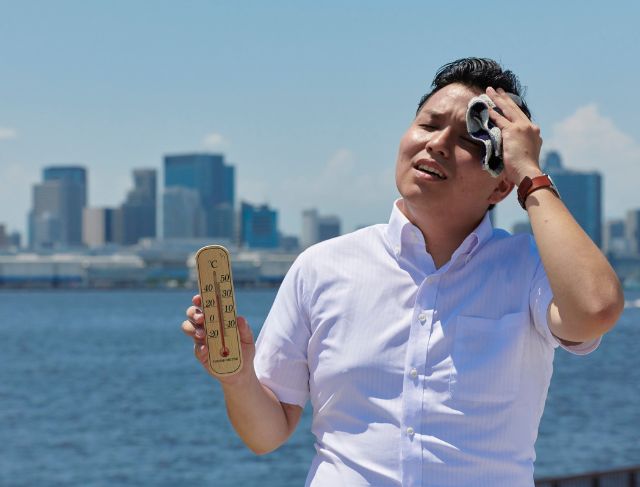
Parts of Western Europe have experienced early summer heat with all kinds of people feeling the heat everywhere: crowded streets, hot weather making it hard for schools full of children to have heat, extremely high temperatures at sports and/or recreational venues and in many public places because of the historic heat that has hit this region as well this year.
One example of extreme heat is the record temperature of 40.3°C recorded in the town of Mora, Portugal, which was an all-time high for the country that has been measured since May; this is the first time that this record has been set since it was established and has now been broken by an existing record that has been in place for over 20 years. Weather and climate experts continue to show interest in this new high temperature because of what they believe are erratic weather patterns across Europe.
Many parts of Western Europe, like France, Spain, Italy, Germany and Switzerland, have all seen extremely warm temperatures as well; therefore, temperatures we usually see in mid-summer have now occurred in late-spring across all of Western Europe.
Officials in France have begun planning to mitigate the consequences associated with extended periods of excessive heat before the anticipated summer event(s). The officials have discussed how to prevent wildfires, manage water resources and develop emergency response plans. If the trend for extreme heat continues through summer, experts believe that there will be a significant strain placed on all available resources.
The extreme heat has impacted many of the students’ daily activities at schools throughout France. It has been reported that some elementary schools had classrooms so hot that classes could no longer safely be held; many classrooms were also temporarily closed and reported temperatures so extreme that many teachers who taught at these schools expressed frustration about working in these conditions. Many teachers in different areas of France brought their own fans to class, to help students and faculty cope with the extreme heat.
National examination schedules continue without interruption even though it may seem appropriate for them to be postponed due to improved climate conditions. Schools have received encouragement from educational authorities to provide shade or cooler areas for students during break times. Discussions on how schools can make changes to adjust to more heat waves continue to be of public interest.
In addition, sports have been affected by the heat wave. Many of these athletes have said that the extreme weather conditions have caused additional wear and tear on their bodies and increased the difficulty of competing in such large tournaments.
In Italy, some of its most populated cities, including Rome, Florence, Turino, Bologna, and Belluno, have been placed under a level 3 heat alert. Residents of the listed cities are being encouraged to take precautions. Local governments are focusing on keeping older people and anyone who has a pre-existing health problem hydrated and limiting their exposure to direct sunlight for extended amounts of time.
Spain is facing a similar situation with Madrid’s forecast expected to reach the mid-thirties (°C) (°F), typically temperature ranges for mid-summer (July/August), not late spring (April/May). These weather conditions are an incredibly odd occurrence at this time of year, according to their meteorologists.
Scientists believe that an atmospheric feature called a heat dome contributes to the heatwave we are now experiencing. A heat dome is formed by a large zone of high pressure that traps warm, moist air in the lower atmosphere and does not allow cooler temperatures to enter into it. Consequently, the trapped air continues to build up heat and the pressure increases on a constant basis, and thus there is a potential for the air inside of a heat dome to remain hot for days and sometimes weeks once it is created and established.
Many scientists who study climate change are now arguing that there is an increase in the number and intensity of extreme form of weather resulting from global warming. For example, heatwaves that used to occur sporadically are happening with greater frequency now; and there is an associated increase in the occurrence of extreme hot weather as evidenced by the continual record production of high temperature observation.
Climate scientists worldwide have been sounding the alarm about what to expect over the next few years: It is likely that future years will rank amongst the warmest years ever experienced. Many of the hottest years experienced up to this point in modern-day history have occurred within the last 10 years, and this is part of a larger long-term trend and cannot be attributed to just any seasonal variation.
As Europe prepares for yet another extreme temperature episode, its governments, businesses and communities realize that extreme heat events are not just isolated incidents but are now factors that impact public health, infrastructure, education, travel and everyday living throughout many countries.
The recent record temperatures recorded in Portugal may just be one piece of news, but they serve as a stark reminder that weather patterns are changing very rapidly and thus climate resilience has become a top priority for many nations across Europe.