“Lisbon is in mourning. This is a sad day for our city.” These were the words of Mayor Carlos Moedas, following an incident that left at least 15 dead and dozens more injured. What was supposed to be a picture perfect ride up one of Lisbon’s steepest climbs, turned into the city’s darkest day.
The Crash that Stopped the City
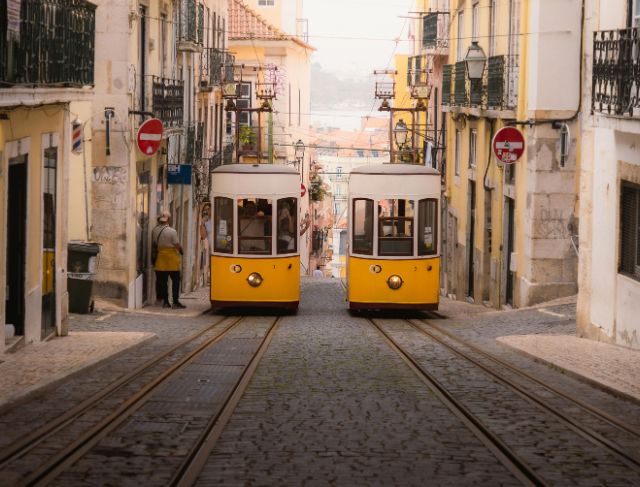
Around 6:00 PM on September 3rd, the Elevador da Glória, an iconic funicular in Lisbon that connects Restauradores Square and Bairro Alto, lost control. Firefighters say that one of the supporting cables gave way, causing the tram to speed downhill and slam into a building. The station wagon-size tram crumpled like paper and one of its bright yellow cars rolled off the tracks and onto its side, surrounded by debris and smoke.
Pedestrians were in the wrong place at the wrong time and those trapped inside the carriage had little if any chance of escaping. Locals and tourists nearby looked on in disbelief as the charming funicular ride had turned chaotic.
Witness Reports
60-year-old Paolo Valério thought a car collided with his garage when he heard the resounding sound. But, when he raced outside he saw bodies on the floor and crowds congregating at the bottom of the hill. “It was like the tram just lost grip of the rails and could not stop,” the man said to local media while describing the screams coming from the passengers as the vehicle slammed into the pavement.
The Victims
Portugal’s Health Ministry reported there were both local citizens as well as foreign tourists who were killed, however, the report couldn’t release the nationalities immediately. No children were among the deceased, although one small child was hospitalized with injuries. By 8:30 PM, all victims had made it into hospitals across Lisbon, namely Santa Maria and São José, including several who were in critical condition.
An Iconic Landmark
Created in 1885, the Elevador da Glória was not merely a public transportation service, but cultural institution. Every single year, over 3.5 million people rode on the carriages, snapping pictures of cobble stone streets, pastel-colored buildings, and panoramic views from Bairro Alto. For the citizens of Lisbon, it was a part of their city’s soul, and for tourists, a must-do experience.
And that’s why the accident hurts so badly. Residents typically didn’t use the funicular in their average circulatory day; however, like all cities, its oversize character lent an identity to Lisbon. Trust, then, is lost when you lose a piece of the thing that attached so many people to another piece of Lisbon.
Aftermath and investigation
There was a second tram which was also going uphill in the same moment, and remarkably, that tram didn’t receive any damage. Investigators are now left to discover why a cable failed.
There are no camera flashes, no squeaky wheels making the climb, only the flowers and candles planted in memory by citizens grieving at the site.