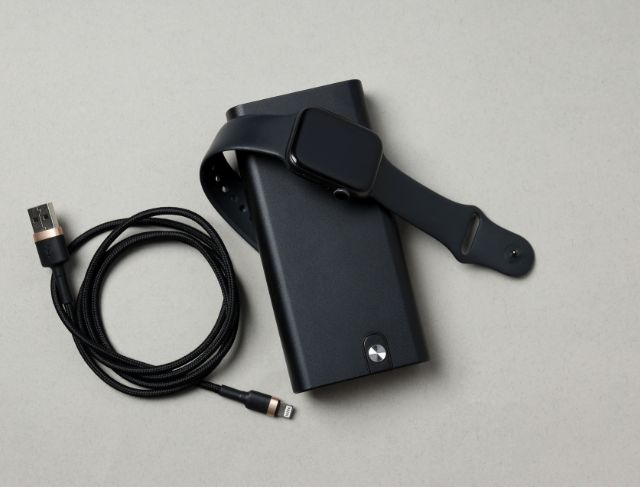
Flying to Japan in 2026? It’s likely your power bank will be going with you, but the odds are slim that you’ll be able to actually use it.
As of right now, Japan’s Ministry of Land, Infrastructure, Transport, and Tourism is reviewing whether or not they could create regulations restricting the use of power banks on flights. If all goes as planned, those restrictions should take effect sometime in April 2026, and an official announcement as to rule implementation is planned for late March.
Yes, you can continue to take power banks on an airplane. However, you can only have up to two per person. The difference is that you will not be able to charge your devices with the power bank while on board. Additionally, you will not be permitted to charge your power bank from an in-seat power outlet.
In the field of aviation, battery-related fires, particularly with lithium-ion batteries, have increased in concern as a result of growing incidents. The impact of a small overheating event within a cabin can escalate drastically at 35,000 feet, making it imperative for regulators to require that these devices be kept in a location where they can be monitored easily.
Japan tightened their regulations last year requiring passengers to keep externally powered batteries under supervision during flights (i.e., it has long been prohibited for them to be stored in checked baggage). All batteries exceeding 160 watt-hours are not allowed to be transported at all, whether in cabin bags or in checked luggage.
As more airlines implement policies to restrict the use of power banks in-flight, some airlines, including those within the Lufthansa Group (Swiss, Austrian Airlines, Brussels Airlines) and other airlines such as AirAsia, Singapore Airlines, Scoot and Emirates, have already implemented similar limitations on carrying external battery packs through the policy which prohibits the use of these devices on board.
Major airlines in South Korea (Korean Air, Asiana), Taiwan (EVA Air, China Airlines) and India are expected to adopt similar rules beginning in 2026.
There has not been a change to the global standard for power banks since 2020. For most airlines, power banks that are less than 100 watt-hours (approximately 20,000 mAh) can be carried on without prior approval from the airline. Power banks rated between 100 and 160 watt-hours require explicit permission from the airline prior to boarding, while power banks rated above 160 watt-hours cannot be brought onto the aircraft.
In addition, these batteries must be carried in carry-on bags, rather than in checked luggage. Most airlines recommend placing your power bank in the seat pocket rather than in the overhead bin, so that it can be easily located and accessed in the event of an emergency.
Some travelers may find this inconvenient, especially since power banks provide a vital service to long-distance travellers who often rely on power banks for entertainment (streaming, gaming) and connectivity (social media) throughout their journey. However, aviation authorities have made the proactive decision to ensure safety over convenience when it comes to power banks.
So if you plan to travel to Japan in 2024, remember to bring a power bank, but do not plan on using it once you have boarded the aircraft.