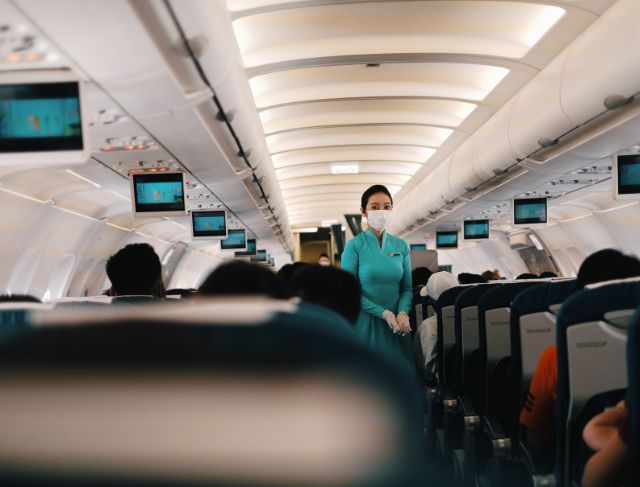
Many travelers experience ringing in their ears during airplane trips. This occurs during takeoff and landing, and it can also happen with a feeling of fullness or blockage in the ear. Sometimes, those sounds might also sound a bit muffled.
Although this ringing might be annoying for travelers, this problem is not dangerous. This is due to the change in the air pressure in the aircraft.
Why Do You Experience Ringing in Your Ears after Taking Flight?
The middle ear has a tube called Eustachian tube, which connects this space to the back of the nose and throat. This tube is responsible for equalizing the air pressure inside the ear and outside.
When the airplane takes off and climbs, pressure inside the plane is changing, and the same situation is taking place later, when the aircraft descends to land. The Eustachian tube might take some time to adjust to these differences.
Air pressure inside and outside the middle ear can create temporary differentials. This can lead to the following sensations:
- A feeling of fullness inside the ear
- A blocked or blocked sensation
- Pain or discomfort in the ear
- Muffled hearing
- Ringing or buzzing in the ear
However, most of the time the bad sensations would stop as soon as the pressures equalize.
Ear Pressure During Take-off and Landing
Ear pressure issues are most commonly induced during take-off and landing.
The pressure varies drastically because the aircraft ascends rapidly and enters the cabin pressure environment and backs down as it descends.
For proper functioning and repairing, the Eustachian tubes must be opened periodically to allow airflow and bring the pressure into balance. Swallowing and yawning effectively support the procedure.
It explains why passengers tend to quickly process their buildup with hiccups or yawning.
Why Colds and Nasal Congestion Can Make Things Worse
When the Eustachian tube is not working properly, the chances of experiencing ear pressure may increase.
Various factors – including a cold, nasal congestion, sinus infection, allergies, or a middle ear infection – make it harder for the ear to cope with changing cabin pressure.
Consequently, someone who usually does not mind flying may find that they are experiencing much more severe ear pressure while traveling with a congested nose.
For this reason, travelers with severe congestion or ear infections should consider postponing their flight if possible.
Why babies and children may cry on an airplane
Because of the smaller size of their Eustachian tubes, babies and children are more prone to ear pain related to pressure changes.
Since young children most likely cannot accurately express what it is they are feeling, issues related to this discomfort can manifest as crying or fussing.
Assisting kids in their swallowing or chewing of suitable food can have an effect in terms of the movements that can help in equalizing the pressure.
Can sleep during the take-off or landing impact the stuffiness of ears?
Sleep during take-off or landing can make the discomfort caused by the pressure changes even more intense.
A naturally awake person will yawn or swallow once in a while. Such movements will allow Eustachian tubes to open and allow adaptation of the ears to the increase in the pressure of the cabin.
On the contrary, a person asleep will not display so many yawning or swallowing behaviours. Therefore, the Eustachian tubes will have much less chance to help the ears equalize pressure in the most relevant moments of the flight.
Being awake at the time of the take-off and landing can help a person react timely when the pressure builds up in ears.
Does aircraft noise make ringing in the ears more pronounced?
Changes in air pressure isn’t the only thing that can change the visibility of the ringing in ears during the flight.
Engines noise and noise of the aircraft can be considerably loud. In this case
In some cases, however, the persistent presence of the aircraft may drown out the noise.
As a result, the experience may differ significantly from traveler to traveler.
Is it Unsafe to Experience Ringing in the Ears While Airborne?
Generally speaking, transitory ringing produced by fluctuations in pressure during take-off or landing is not dangerous, and it usually diminishes when the pressure inside the ear normalizes.
Consequently, experiencing temporary symptoms of fullness in the ears, impaired hearing, or ringing could very well be a common experience for some people.
Nevertheless, not all ear discomfort symptoms should be links to the cabin pressure.
Some symptoms should draw greater attention, especially if they are serious and persist even after landing.
When Should You Seek Medical Help After Flying?
If a person experiences severe ear discomfort, he or she should consult a specialist.
Passengers should be particularly careful if:
- They feel pain in the ear
- Their ear is leaking
- Their ear is bleeding
- They have trouble hearing after landing
- Their symptoms continue to persist after the plane has landed
This condition might be a sign of underlying problems.
If the condition persists, consulting a doctor is advisable.
Being in an airplane cannot be very soothing for some people, especially in the case of sudden change of pressure that might cause some issues in terms of feeling the pressure in the ears.
Here are some simple ways that can help with dealing with this unpleasant feeling:
- Keep Swallowing
Swallowing can help open the Eustachian tubes thus helping with equalizing the pressure between the middle ear and the environment.
Instead of waiting when feeling discomfort in the ears, people can start swallowing regularly while the plane is going upwards or downwards.
- Try Yawning
Yawning is also a simple way in making the Eustachian tubes open.
When the descent phase starts and pressure is experienced in the ears deliberate yawning might help to lessen this feeling.
- Chew Gum or Suck on Candy
Chewing gum or sucking on different candies can make a person swallow more frequently.
These tricks can be helpful for many people who experience pressure in their ears during flights.
- Carry Out the Valsalva Maneuver Carefully
The Valsalva maneuver is another way to deal with this.
To use this way, you need to close your mouth and nose and exhale. The purpose of this maneuver is to achieve equal air pressure in the middle ear.
It is important not to use too much force. Do not create excess pressure because the aim of the Valsalva maneuver is to do it smoothly.
- Stay Awake During Takeoff and Landing
It would help travelers to stay awake during these stages as this will be easier to swallow and use other techniques while in flight.
This advice may be especially important for those people who have problems with their ears while flying.
- Use Filtered Earplugs
It is possible to use earplugs that are designed with filtering features and which can relieve pressure discomfort.
Passengers with flying troubles may find these earplugs useful.
- Put Your Flight Off Until You Feel Better
It is reasonable to consider putting off the flight in case a person is suffering from severe sinusitis or ear infection.
If the Eustachian tubes are already diseased, it may be difficult for a person to adjust to the cabin pressure change.
If the ringing and discomfort subsides in short time, there is generally no need for concern based on the information given in the source material.
On the other hand, one should not overlook the incidences of ongoing ringing, pain in the region of the ear, discharges of fluids or blood from the ear and loss of hearing that do not resolve.
In such cases, seeing a specialist would be useful to identify any possible underlying conditions affecting the ear.
To conclude about ringing in the ear at the time of air travel.
Ringing in the ear during the time of ascent and descent is said to be very uncomfortable; however, the condition is usually connected with rapid changes of pressure within the cabin.
It’s very important for Eustachian tubes to fulfill their job when direct contact between the ears and the outside environment takes place. As soon as pressure increases, the passenger may feel pressure, fullness, clogging up of the ear, or ringing.
There are many simple things you can do to help your ears adjust while flying, such as chewing gum, swallowing and yawning. Moreover, staying awake while taking off or landing can also ease the process.
Most importantly, any lingering or acute symptoms should seek medical attention, especially if considerable pain, discharge, bleeding, or trouble hearing develops that does not resolve after the plane lands.
It’s helpful for travelers to know why ear pressure occurs so they can better cope with the situation—and a few simple steps can make flying a much more pleasant experience.