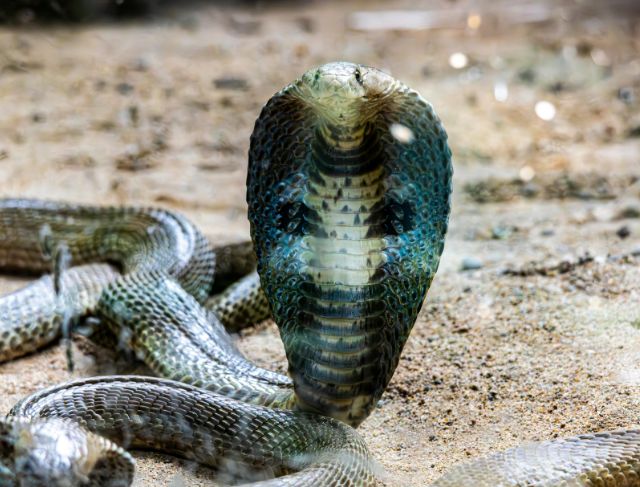
Suddenly seeing a cobra near a trail, rock pile, or forest path will turn an enjoyable trekking trip into a stressful one. Trekkers who enjoy hiking through mountains, jungles, and hidden natural areas must learn basic snake-awareness skills as they would for having water with them, or wearing the right type of shoes. While cobras generally tend to run away from humans, when surprised or cornered, they are capable of becoming extremely dangerous in a short period of time.
In fact, many experienced trekkers report that they very often see signs of snake activity prior to ever seeing the snake itself. One such sign is the presence of a narrow, trail-like marking running across dry leaves or grass where snakes have travelled many times. Additionally, cobras are known to seek out quiet areas that contain moisture and warmth, with little human activity. Spots where there are old wooden pieces, rock piles, roots from trees, or old animal dens, are usually the best spots for cobras to establish a hideout.
Some hikers may identify the area occupied by cobras by detecting a powerful reptilian scent associated with damp, sealed off places. This is not a guaranteed way of locating snakes, so be careful regarding the scent of a fishy odour around bushes, caves, and fissures, as this can signal that snakes may be close by.
A common indicator of snake activity that is taken for granted is the finding of shed snakeskin. If you find snakeskin on or near a trail, dense bush, or under large rocks, it indicates that snakes are still using this location.
Cobra encounters become more likely as a result of having abundant food sources. Snakes naturally prey on animals like rats, frogs and other small creatures; therefore, they often hunt in and around wet forests and river trails. Following rain, snakes are likely to be more active as it is cooler.
It is very common for hikers to sit carelessly on logs, large boulders or at the foot of thick bush without first checking to make sure the area is clear. Cobras prefer to rest in areas shaded from the sun. Therefore, if you reach into small holes, gaps in rocks or underneath fallen trees, the possibility of being bitten is very high. Most snakebite incidents occur because someone reaches for something without a clear line of sight.
Cobras will usually warn you before they strike. They have a famous hood and will hiss loudly so that they can scare you off, rather than attack you. Try to keep yourself calm when you are in this situation.
The early morning, late afternoon, and just before dark are when many snakes are most active. When you are hiking at these times, you must pay more attention, especially on narrow trails going through forests. You can use a trekking pole to probe bushes and tall grass ahead of you so that you will be less likely to step on a snake.
Your clothing is very important when you are outside. Wearing high hiking boots and pants will protect you better than sandals and shorts. Stay away from dense vegetation as much as possible while you are hiking, especially in tropical regions where you have less visibility.
Wildlife experts emphasize to hikers that cobras are unlikely to pursue humans. The usual cause of a cobra bite is because their path was blocked and they are either threatened or have been cornered. Therefore, allowing space for the snake to escape from the area naturally is advisable for both the traveler and the snake.
Enjoying a pleasant hike will depend on being aware of your surroundings, how to be prepared, and how to respect your natural surroundings. Often, the most important survival skill when hiking is simply to have enough common sense to know when to stop moving, control your anxiety, and quietly back away from a potentially dangerous situation.