Most travelers tend to want to throw down their luggage, get into their beds, and get some rest after a long trip. Flight attendants, though, tend to do things the other way around. Before getting settled, many crew members take a few minutes to go through their hotel room to check for potential hazards.
For flight attendants, this habit is commonly referred to as “the hotel room autopsy.” This quick check-up has become a habit for people who spend hundreds of nights in different hotels every year. This is also not driven by anxiety; as the flight attendants themselves explain, this practice draws on years of experience with hotels having different environments, security measures, and protocols for emergencies.
What Flight Attendants Check First
First on the list of flight attendant duties is scanning the room thoroughly. The crew may leave the door ajar during the inspection in order to make sure the place is empty and gives a clean impression.
Martinez a flight attendant in New York and having an experience of 19 years said that this step allows the flight attendant to know their surroundings and confirm that nothing is amiss. This is a rapid inspection process and may last some minutes only
After that, they inspect some less obvious areas such as the bathroom, shower, bathtub, cupboards, and other areas that are often disregarded. The goal of this step is to notice any strange objects beforehand.
Finding the Emergency Exit Before It Is Needed
Another important task is finding the nearest emergency exit or evacuation staircase. Most of the hotel rooms have evacuation plans stuck to their door thus enabling guests to know the plan beforehand.
Travel guide Rooney stresses the importance of not waiting until an emergency occurs to learn about the layout of a building. It is advisable to keep in mind which way one should turn when leaving the hotel room and how far it can take to get to the stairs.
Checking the Locks and the Phone of the Room
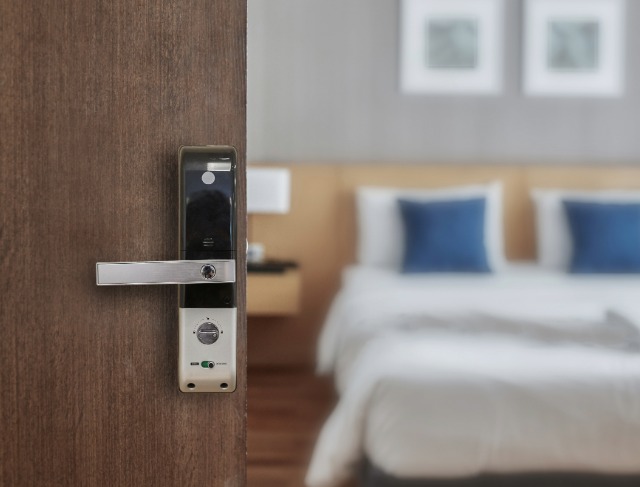
Other hotel staff that should be consulted are the flight attendants who can test if the locks of the room work. These can include the main door lock, deadbolt,? safety latch? and windows. It may offer an extra layer of security while staying at the hotel.
Making sure that room phone works is very important even if you have a smartphone. It may be helpful for contacting the reception or emergency services in case of mobile services failure.
Rooney also reminds visitors that they should never rush to open the door to someone who claims to be a hotel employee but call the front desk first.
Taking some Additional Precautions
Several flight attendants also have portable door alarms or other doorblocks as a precautionary measure. They serve well as additional alarms in the event of an intrusion by any person. Nevertheless, they should only serve as an extra and not a replacement of the hotel’s locking system.
In addition to that, Martinez suggests that travelers should carry a small flashlight for emergencies like power outages.
The general aim of the 90-second inspection is preparation instead of panic. According to Rooney, spending a minute or two going over the room and the locks along with the exit plan is worth the effort as it puts the mind of the traveler at ease.
According to Martinez, the principal idea behind preparedness is that it may help tourists stay confident on their travels rather than make them frightened.