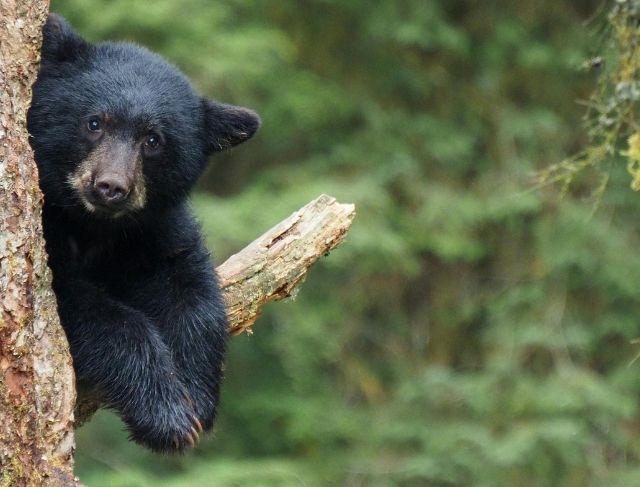
This is an important development, one that continues a pattern that many municipalities throughout Japan have had difficulty in addressing over the past few years; the number of human/bear encounters is increasing steadily, and the outcomes of these encounters are becoming increasingly serious.
On Wednesday, a bear attacked and injured four people in Fukushima City after it left a rural area and worked its way across urban and industrial sections of town, causing a great deal of panic among the employees of the companies it passed through as well as the people who lived and/or worked in the area. Although no deaths occurred, this case illustrates how unpredictable wildlife encounters can be when larger animals enter into occupied areas.
Incredibly, the mischief caused by the bear did not begin in a forest or in the backcountry hills where bears generally tend to live; in fact, one of the first reported encounters with this bear took place inside of an auto parts manufacturing facility. Workers at the facility were caught completely off guard, as rapid response warnings rapidly spread through the company following reports from workers that had sustained injuries from the bear.
According to authorities and medical responders, there were additional victims of bear attacks at various locations later on. One person was bitten in a local residential area, and a second incident occurred at industrial places that produce electronic items. The two occurrences occurred in such a short period of time that local officials had trouble keeping up with them.
In some of these instances it was determined that although the victims did sustain non-life threatening injuries, at least one of the victims suffered from significant injures as a result of these bear encounters. Emergency responders had been dispatched to all of the emergencies that occurred in the area but the bear attacks only illustrate the risk associated with there being an increasing number of bear-human encounters.
However, the card itself does not give a full representation of the extent of the problem of bear attacks in Japan.
Bear sightings across Japan over the last few years have drastically increased. Approximately 60,000 of bear sightings will be reported this year alone. In fact, in a relatively short amount of time the record number of bear sightings (that had existed until 2011) was nearly doubled.
Wildlife biologists and community members who come into contact with bears have begun noticing patterns of unusual bear behaviour. In many cases the bears are wandering out of their natural habitats (forests) and into residential neighbourhoods, near schools and into business or commercial areas and even disrupting businesses and tourist attractions.
These types of encounters are frequent occurrences for many residents. While there are certain times of year when this situation increases in intensity (e.g., immediately after bears come out of hibernation to feed and start to expand their ranges), the likelihood of a bear encounter tends to rise with each report.
During 2006, there were 12 separate Big Bear, California, residents who experienced at least one bear sighting outside their homes. This is in addition to several reports from other surrounding communities. These reports show that bear encounters continue to become more common place outside of traditional mountain communities.
In addition to Big Bear, near Tokyo, multiple people have reported seeing bears in the suburbs of the city in 2006. One report, made by an outdoor enthusiast, documented him seeing a bear while hiking in the Tokyo region. Many reports indicate bear sightings during the months of May through July, which shows that bear encounters are becoming a major issue among local governments and those who participate in outdoor activities.
Local governments have expressed concern over how common bear/people encounters are becoming, with most saying they do not have enough funds available to secure safety for their residents. Environmental agencies have established contests to monitor bear incidents and bear attack statistics. Recent data indicate that bear attacks and fatal injuries to humans from bear attacks pose a significant threat to public safety. Numerous local and state governments have experienced record-breaking fatalities from bear attacks during past winters, which has led to conversations regarding wildlife management, altered habitats, and preventing further bear/human encounters.
In Fukushima, officials have been working hard to secure the flood-damaged areas of Fukushima, and protect the safety of the public, while urging residents to be aware of their surroundings. At the same time, officials have taken steps to monitor the movement of bears in the Fukushima region, and try to prevent the possibility of any further attacks.
Although the bear attacks in Fukushima may eventually stop making the news, the bear attacks in Fukushima are only part of a larger problem throughout modern Japan. In addition, as bears continue to move into areas inhabited by humans, many communities will need to adapt to the fact that they will now be more likely to encounter wildlife than in the past.