There are cases when a growing trend can cause the same tradition to harm the same traditions that attracted the guests. At the moment, such an example can be seen in Milan as one of the oldest traditions in the city (hundreds of years old) is forcing one of the most famous buildings into having to be restored.
The interesting part of this situation is that the attraction involved in this years-old tradition is not a statue, fountain, or the façade of a historic building. In fact, it is a small portion of floor tile.
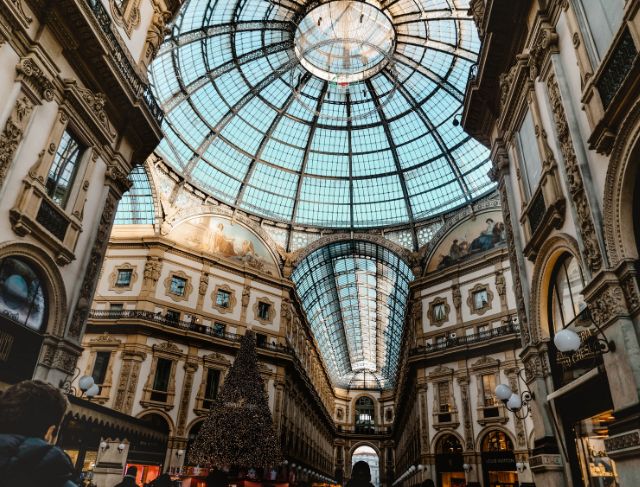
Most guests who enter the Galleria Vittorio Emanuele II go directly to the mosaic of a bull located in the centre of the Galleria. From that spot, visitors will take their left or right foot and put their heel on the same area and then turn in a complete circle.
The story behind the ritual is relatively simple. Some people believe that by spinning in a circle they will get good luck, while others are convinced it will ensure that they will return to Milan in the future. Regardless if someone truly believes in the practice of spinning or simply joins the group for an interesting time, it really does create a problem as thousands of heels from thousands of people are grinding against the same spot every year.
The story has an even more surprising twist in that thousands of tourists are willing to wait in long lines just so they can stand on the bull and spin, for only a few seconds! For this tiny portion of floor in a city of stunning architecture, ultra high-end retail shops, and some of the most famous landmarks in the world to these many, it is probably one of the most photographed places.
Before many learn about the history of the mosaic, they will have typically heard about the ritual associated with it.
The foot traffic has been so extensive that there is now a significant challenge of conservation. The repeated stresses from foot traffic over many years have now resulted in the loss of many mosaic pieces and the creation of a very visible depression where the ritual takes place. City officials state that the amount of damage that has occurred has now resulted in the need for yet another restoration project for this site.
Most people dont realize that the mosaic is actually much older than most visitors think. The mosaic is part of the decorative floor that is in Galleria Vittorio Emanuele II, one of Italys most historically significant shopping arcades, which was built during the 1800s. The gallery, therefore, is still one of Milans most beautiful architectural features.
The bull represents the city of Turin, which was once the Capital of Italy. What started as a piece of art has now become the center of a 21st-century tourist superstition.
While the museum is undergoing restoration work, hundreds of people each day continue to walk through the gallery. Many people stop to watch the restorations, take pictures and look around nearby upscale fashion boutiques, as well as at the original location of Pradas first store.
The task of restoring the damaged mosaic is in the capable hands of a professional named Gianluca Galli, who specializes in the preservation of historical art. Galli must first examine the original work in great detail before he can begin working on recreating the original pieces of stone for use in replacing damaged tiles on the floor.
Instead of only using some of todays modern methods, Gianluca did things the old way. He has used the pieces he has left from the original mosaic to recreate the pieces of the damaged area as closely as possible by using the remaining parts as guideline patterns to shape the replacement pieces from.
The new materials used during colo-deck were chosen based on their ability to withstand the added pressure that visitors will apply when they will return to the location for spinning.
As tourists look for alternatives to the bull mosaic due to the current restrictions, many have found nearby mosaics to be suitable replacements for visiting Milan and removing themselves from the opportunity to engage in some form of the tradition.
This is indicative of an increasing challenge for heritage sites across the globe – tourism is essential for livelihoods; however, too much interaction over time does lead to deterioration of cultural treasures that people travel thousands of miles to see.
For Galli, this project is much more than just a section of a restoration process – he views it as an ongoing mission to protect Italys artistic heritage. He also feels that there needs to be a greater influx of young professionals entering the restoration field because the need for skilled professionals far outstrips the supply in Italy.
While the majority of restoration projects involve a great deal of travel to and from the job site along with challenging environments, Galli believes that working to preserve historical artwork provides him with an extraordinary sense of pride and responsibility.
In conclusion, the story of the bull mosaic serves as a perfect example of how innocent tourism behavior can have an enormous long-term effect. What was once a playful wish for fortune by tourists now has sufficient potential to forever alter stone, history and keep restoration professionals busy into perpetuity.