Myanmar certainly has numerous attractions for tourists. Ancient temples, golden pagodas, tranquil lakes, and a culture formed by many centuries of history can be found there. However, in 2026, the main question has changed from ‘what to see in Myanmar’ to ‘is it safe and reasonable to travel there at all’.
According to the data presented by the Myanmar Ministry of Hotels, Tourism and Culture, during the first half of 2026, Myanmar received 530,973 foreign visitors. This is a slight improvement from 500,125 visitors in the same period a year ago.
After the first look, this increase should imply some optimism.
However, these figures require proper awareness.
In 2019, around 4.36 million tourists visited Myanmar. Compared to this number, the present state of the tourism industry in the country is still far from the previous one. The pandemic, military authorities, civil protests, and horrible earthquake in March 2025 have impacted many sectors of the economy.
Thus, indeed, there are more people who visit Myanmar. However, the term ‘recovery of the tourism industry’ cannot be used in this situation.
The future tourism map of Myanmar in 2026 is distinct from the one which visitors would remember from the high times of tourism. Bagan, Yangon, Mandalay, and Inle Lake are the names of famous destinations; however many places in Myanmar cannot be covered by major travel companies due to security issues.
This creates a paradox.
The regime is issuing visas, promoting places of interest, and inviting tourists from the neighboring states. Airlines, hotels, and local tourism companies still have some reasons to operate. At the same time, different regions of the country suffer from insecurity, while travel advisories issued by the governments of the West complicate international tourism.
For travelers, entering Myanmar is easier than deciding whether to go.
The country’s official eVisa system is still in operation. A regular eVisa used by tourists costs USD 50 and allows staying in the country for 28 days. The applicants need a valid passport, a recent photo, a copy of the passport page with the name, and proof of return ticket.
However, a visa only allows for entry. Just because one possesses a visa does not ensure safety, due accessibility, or the presence of the necessary travel insurance.
Here comes the confusion.
Travel insurance can play a crucial role for travelers to regions afflicted by warfare or severe internal conflicts. Some insurance firms exclude travel destinations with high level travel alerts. Some tend not to cover events associated with war, riots, and emergency evacuations.
For those arriving in Myanmar, this is no small issue.
Imagine obtaining a visa, servicing your hotel, and booking a flight, only to find out that you have no effective insurance for your trip. Medical evacuation can also prove difficult, especially in a case when a traveler is injured in a place with no or limited medical treatment facilities.
This is the reason why professional travel agencies cannot merely sell a package tour to Myanmar.
Travel firms have to obtain a proof of the provided insurance coverage, reliable local partners, 24/7 monitoring of the security situation, as well as flexible cancellation policies. Business travelers are responsible for more than the rest because companies must take care of the employees’ safety and internal approval procedures.
At this time, Myanmar’s tourist figures are still strongly influenced by travellers from nearby countries.
The most important countries from which the tourists come are China, Thailand and South Korea, as well as business visitors, staying with friends and relatives and religious operations. The way tourists travel varies between Asian tourists and those from Europe or North America.
In comparison to the long-distance team, the workers will usually not spend too much time before arrival and buy tickets right before the trip. For instance, a cultural traveller may find himself or herself in several places.
The problem is in the fact that numbers alone do not mean successful tourism activity.
Statistics point out that during 2025 there were 973,263 international visitors in the country that saw a decrease from about 1 million people in 2024. It was partly caused by smaller volumes of arrivals from the neighbouring countries. The goal set for the government is to reach 1.8 million in the future.
However, it is interesting to see that tourism is still in existence.
People fly to Myanmar. Business trips are still proceeding. Religious journeys still occur. Travellers from the neighbouring countries still come and hotels and tourism businesses are still operating at
However, the tourism industry in Myanmar is considerably smaller and more selective than it was before it encountered enormous political issues and security threats. Besides, the biggest attraction of the country is its culture.
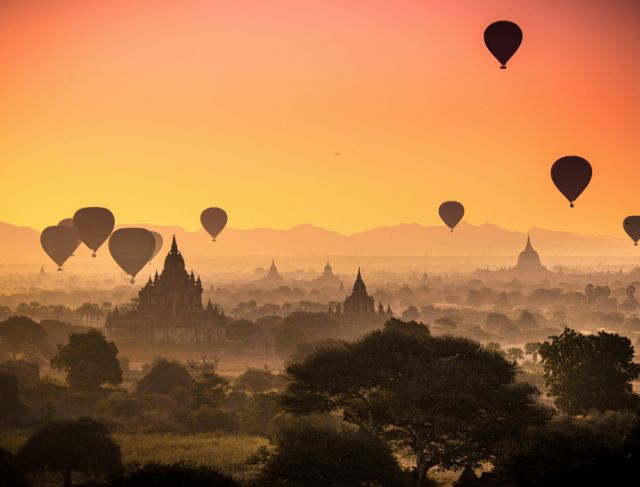
In particular, the golden Shwedagon Pagoda in Yangon is still the most recognizable symbol of the country. And Bagan is still famous for its scenery filled with majestic old temples and pagodas. Inle Lake remains famous for its waterways, communities, and unusual way of life.
All of these tourist sites exist still.
What has changed is the circumstances surrounding those monuments.
This is the most important thought for those searching for information about traveling to Myanmar in 2026. The country can be open for foreign tourists and yet it may restrict them.
A tourist destination does not have to be closed to be difficult to visit.
Airplanes can fly there. Hotels can book tourists. Visas can be obtained. Tourist attractions can welcome tourists. Nonetheless, problems with safety, transportation, local conditions, and insurance prolong the journey and make it different from the standard vacation experience.
Travelers that were traveling for business might have to know the exact entry point, the mode of transportation available in the country, accommodation options, and the meeting venues just before embarking on the journey. Conditions may, however, change even after a visa has been granted.
The situation applies equally for tourists.
It is wise to check travel advisories before leaving than to rely on old travel guides and use social media to learn about the current situation. A place open for tourism months ago may not be the same now.
Myanmar tourism industry finds itself in a unique situation. While there is still demand especially from nearby Asian markets, the country is unlikely to see any significant influx of international tourists.
The development of the tourism sector depends less on marketing promotions or easier visa rules and more on factors that cannot be influenced by the government agency responsible for tourism development.
Less conflict could help.
Reliable transport could help.
Better healthcare could help.
Travel insurance that would actually help on one’s trip could help.
Meaningful decrease in travel warnings could help.
Until these factors change, Myanmar remains a destination with two different realities.
It is open in theory.
But in reality, it is a difficult country with varying levels of risk and impediments to traveling around it.
The temples, however, are still in their places and so are the pagodas and Inle Lake. The cultural heritage of the country still holds people captivated.
What truly matters now is whether the situation around these sites will stabilize enough for the return of massive international tourism.
Right now, tourism in Myanmar is not about a revival once it gets back to normal.
It’s all about surviving.