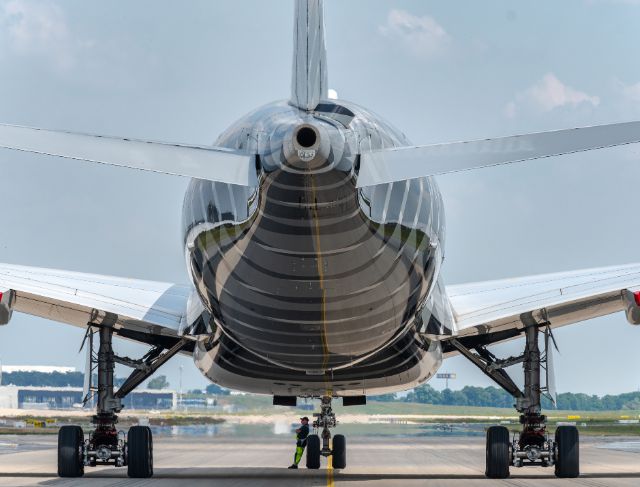
If you are on a flight from Sydney to London, you will be able to get on the plane, watch a few films, have a nap, eat several times, and board in Sydney and deplane in London. The day is not too far away that this whole scenario happening could be an everyday reality, as Airbus continues to develop its newest ultra-long-range aircraft, the A350-1000ULR.
Most news articles for the airline industry tend to be written with speed as the main basis for comparison among airlines. However, airlines are doing more than trying to outdo each other by speed with their aircraft; they are trying to compete in distance. The establishment of nonstop service between two cities located on opposite sides of the world is one of the mountain goals in the airline industry. Airbus feels its newest aircraft has greater potential of moving beyond that mountain.
Recently, the European manufacturer of airplanes accomplished its first flight of a test A350-1000ULR airplane. With this successful flight, Airbus will now begin a very intensive series of testing that will occur over the next few months in order for the test airplane to continue to move forward to being used commercially.
The test flight took place from Airbus in Toulouse, on the southern coast of France, and lasted four hours for the first flight. On that test flight, the test aircraft had Engineers onboard monitoring much of the flight data from many systems. The test aircraft was at over 41,000 ft (approximately 12,500 m) from sea level by the end of the test flight.
Even though the duration of the flight can be considered relatively short, this is not an assessment of maximum endurance but instead on the performance of the aircraft, both in terms of data collection and in terms of verification of modifications to facilitate ultra-long-haul operations.
A number of major upgrades have been made to the aircraft, including an increase in fuel capacity. The fuel storage system has been upgraded on the Airbus A350-1000ULR, which enables the aircraft to fly a maximum distance of up to 18,500 kilometers (11,500 miles) on one tank of fuel. This would create a potential nonstop route between Sydney and London, which means the aircraft could be in the air for as long as 22 hours up to or possibly beyond 22 hours of continuously flying.
The A350-1000ULR project is being driven by Qantas and the Australian airline’s order for 12 A350-1000ULR aircraft will enable the airline to have direct services from Australia to some of the major centers around the world.
In addition, Qantas has been vocal about the nonstop flight between Sydney and London, which until recently has been considered one of the biggest hurdles in aviation. The massive distance between the two cities has always meant that a contact (stop) was necessary to allow the aircraft enough fuel to complete the long-distance flight. The new Airbus aircraft is expected to improve the capability of making nonstop flights commercially viable.
The idea of long haul flights lasting almost 24 hours has created a lot of excitement and will likely lead to some surprising developments related to passenger comfort and experience. There are a number of airlines and manufacturers working on creative measures to help reduce passenger fatigue on these extended journeys.
The A350 family has been referred to before as having the benefits of being fuel-efficient, cost-efficient, and providing great passenger comfort; the ultra-long version builds on those advantages with new engineering designs that are specifically intended for use on the world’s longest flights.
But before any of these airplanes can be put into service, they will have to go through a very comprehensive certification process. Engineers from Airbus will be studying all applicable performance requirements to ensure compliance with all international safety and operating standards over the course of many months.
If everything goes according to the present schedule, Qantas should receive its first A350-1000ULR in April 2027 which is later than originally planned due to their previous plans for an earlier launch of nonstop Sydney/London service.
The introduction of the new airplane will continue to shape global aviation records. Currently, Singapore Airlines runs the longest commercial flight in the world between Singapore and New York City, which is approximately 15,350 kilometers in length and often operated for approximately 18 hours of flight time.
Since the Airbus A350-1000ULR has a range that exceeds what airlines currently fly, new world records in nonstop commercial flying are likely to be established. It will open up many routes that were deemed impractical for airlines to commence operations prior to the introduction of this airplane. For travelers, it means that layovers can be avoided altogether and that total travel time between two of the farthest cities on earth can be greatly reduced.
As aviation evolves, it is no longer just about flying someplace faster but increasingly about flying directly. If Airbus is successful, the aviation industry could soon see the emergence of 22-hour nonstop flights as part of everyday international travel.