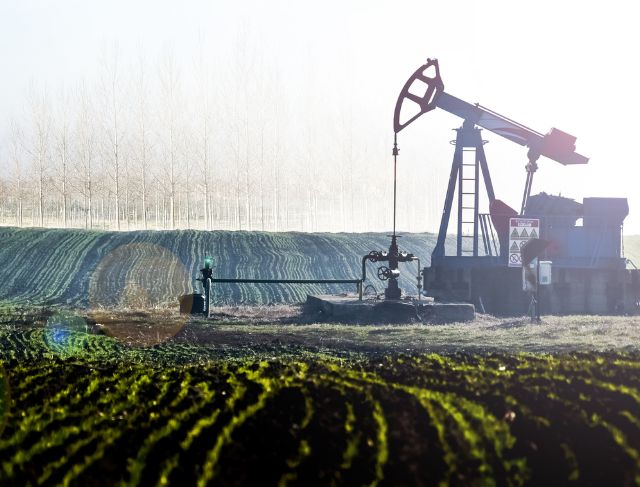
Abundance of natural resources is a tremendous benefit to any country, however throughout history we have seen that oil reserves, mineral deposits and other valuable commodities do not automatically lead to prosperity; in many cases, countries with significant amounts of natural resources have actually had a much more difficult time than those with far fewer resources.
The resource curse refers to the situation where reliance on natural resources hinders rather than promotes economic growth; as a result of relying almost exclusively on the extraction of raw materials instead of creating diverse industrial sectors, countries are vulnerable to corruption, volatile markets, and long-term economic stagnation.
A classic example of this is seen in Venezuela. Despite having one of the largest known oil reserves in the world, the significantly decreased prices of oil has left Venezuela with a very unstable economy and an increasingly difficult cost of living as well as much greater instances of social unrest.
Venezuela’s experience serves as an important warning that owning natural resources does not guarantee solid, stable economic future; without the ability to diversify its economy and also have effective governance, even the most naturally abundant country may endure extreme difficulties.
Similar problems are presently existing in Angola.
Angola has been economically reliant on oil and natural gas production for many years. Because of this dependence, Angola’s economy is at the mercy of global oil price fluctuations. When crude oil prices are high, Angola’s economic conditions improve. However, when crude prices are low, Angola faces significant financial challenges.
This situation presents uncertainty, as Angola’s economic outlook is impacted by factors outside of its control. It will be increasingly difficult for Angola to build resiliency over the long term if it does not diversify its economy.
Another country frequently mentioned in discussions regarding the resource curse and representing one of the world’s wealthiest energy-producing nations is Saudi Arabia.
Unlike several other nations that have waited for issues to arise, Saudi Arabia has been proactively taking steps over the past several years to prepare for a time when they are not dependent on oil. Saudi Arabia believes that the energy sector may change over time; therefore, they have made large investments in tourism, finance, infrastructure, entertainment, and private-sector development.
In addition to the billions of dollars that have been invested over the past few years, Saudi Arabia has implemented large-scale economic development programs to mitigate their dependence on oil exports. Although oil will continue to be an essential contributor to Saudi Arabia’s economy, the efforts to diversify will create new ways for Saudi Arabia to grow economically before their continued dependence on oil becomes a larger concern.
For those outside the Middle East, an example may highlight how the abundance of natural resources can also have negative consequences.
Minerals are plentiful in the Democratic Republic of Congo. Some of the important minerals that are mined in the DRC today include cobalt and diamonds, which are both extremely important for modern industries and are in high demand across the globe. This demand will likely continue to rise as technology and renewable energy industries expand.
Although the Democratic Republic of Congo has many valuable minerals under its ground, the population continues to experience poverty. Reasons such as bad governance, corruption, post-war instability, and very uneven distributions of resource revenues have led to the lack of benefits for many in the DRC.
The dramatic gap between the DRC’s geological wealth and the living conditions of many people in the DRC have led many experts to consider the DRC to be one of the best examples of the resource curse.
Now let’s turn to another country that has a chance to avoid this same path – Indonesia!
Indonesia has many natural resources including minerals, coal, oil, natural gas, forests, and other valuable assets. Over the years, these resources have been the primary driver of Indonesia’s economy, and continue to this day. While the abundance of these resources will contribute to the continued growth of the Indonesian economy, many experts have warned that resources will not provide a permanent source of wealth for the Indonesian people.
The key to Indonesia’s future will be how they manage their natural resources.
A country that extracts natural resources at a faster rate than it invests in education, innovative ideas, manufacturing processes, technology, and human capital risks slowing down its economic growth. Unless strong institutions exist, regulatory frameworks are transparent, and governance is accountable, a country will not be able to ensure that its natural resources generate long-term benefits for the citizens of future generations.
A key feature of the resource curse is that it is generally not resources themselves that are the main cause of the problem. Oil or minerals or energy are not the problem; typically, countries have relied too heavily on one type of resource and failed to diversify their economies so that their economic base includes a number of different types of industries.
There are numerous examples throughout history of successful economies that have used their natural resources to create great wealth if they were well-managed. The biggest difference in these successful economies is how those countries’ governments, businesses, and institutions turned revenues from their natural resources into broader economic opportunities.
In conclusion, the resource curse is a good example of how true wealth does not come simply from having something beneath your ground but rather from using the resources prudently. Sustainable prosperity will not only depend on how much of a country’s wealth comes from natural resources, but also how well the country uses those natural resources to benefit all of its citizens.