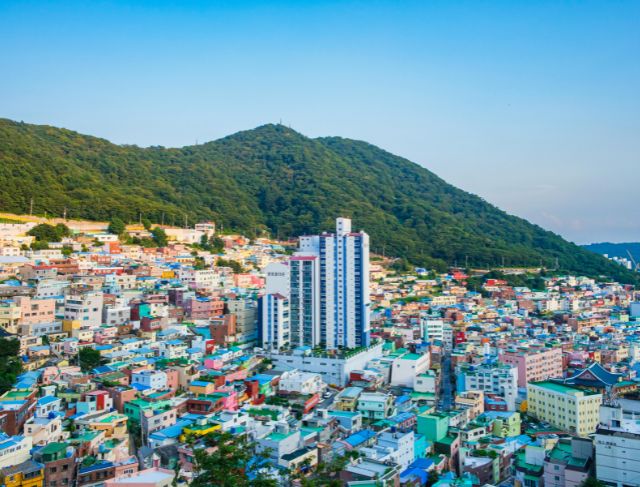
Right now, Busan is definitely the city which is showcasing the strength K-pop has.
Seoul may have been the primary launch point for international travelers landing in Korea in the past; however, data shows that this trend is shifting dramatically. A large contributing factor is BTS with its loyal army of followers.
The demand for hotels, guest houses, or other places to stay has seen fantastic growth throughout Busan in early June. The coastal city is becoming one of the most popular tourist destinations in Korea as evidenced by the influx of tourists from both within Korea as well as internationally.
The most interesting part about this increase is that it has not been caused by a holiday like Easter or Christmas nor any external promotion from the South Korean government to promote Korea as a tourist destination. Rather, an enormous number of travelers packed up their belongings and made their way to Korea simply to attend a BTS concert.
The popularity of BTS World Tour’s highly anticipated concerts; BTS World Tour’s highly anticipated concerts prompted national and international attention towards the city of Busan, with the city becoming a temporary congregation point for true BTS fans from across the globe. As the concert dates neared, demand for accommodations in Busan soared creating a tremendous boost to the economy of local businesses surrounding the support of BTS.
The experience of attending the concert has opened up an avenue for fans to discover a side of South Korea that they might not have otherwise discovered during their travels. In addition to finding a new experience in Busan, many international travelers are also looking for opportunities to visit destinations outside of Seoul. Travel companies have seen a notable increase in the number of international travelers who are seeking longer stays that combine a variety of activities, including cultural and natural experiences. Many tourism companies are beginning to rethink their goals for the future based upon this shift in travel patterns.
Additionally, many of the destinations that are becoming increasingly popular with travelers are located outside of Seoul, and thus are also capturing a greater percentage of visitor’s interest than they did last year. What once was considered a secondary tourism destination is now becoming a primary destination for many tourists.
Gangwon Province has also become an unexpectedly successful destination for travelers to South Korea. The area has capitalized on the growing popularity of “sigol” culture, which represents the celebration of rural lifestyles and rural experiences. Social media is also playing a significant role in introducing younger travelers to the beauty and peace of these less frequently visited areas, and consequently, many travelers are choosing to spend more time in beautiful, quiet villages and in places where life moves at a slower pace.
As a direct consequence of this, we have witnessed an amazing expansion in accommodation demand in Gangwon, and it demonstrates that many people visiting this area want to have a completely different experience than that provided by bustling, busy major cities.
Furthermore, Jeju Island has continued to be an area of great interest in the South.
Whether known by its volcanic landscapes, its coastal beauty, or the distinct cultural identity of its inhabitants, Jeju has consistently been one of the most easily identified tourism destinations in South Korea. Recent increases in bookings to Jeju indicate that people continue to think of Jeju as a “don’t miss” destination when coming to explore Korea.
Jeju Island has much to offer that involves more than just sightseeing; the opportunity to experience local culture, participate in outdoor activities, and live a much more relaxed lifestyle than large cities are all big attraction(s) for visitors to the island.
The continuing growth in community-based tourism has been an inspiration for new travel companies to develop innovative marketing initiatives.
Historically, travel companies offered primarily packages that originated in Seoul; thus, today they are expanding their partnerships with hotels and tourism providers in many areas. New travel products are being developed and adapted to meet changing traveller tastes among international visitors who are now seeking more traditional experiences.
Additionally, travel companies are also seeing more mutual collaboration/funding with K-Pop and large-scale entertainment events and other types of entertainment events as these cultural activities have become very influential in the determination of travel.
The shift in global tourism is evident in South Korea.
No longer are people just going to places because they are known for famous sights; more and more they are choosing destinations based on experiences, communities, and/or events that they view as personally significant. A concert, festival, or gathering can now be the sole reason why a traveller chooses a particular destination.
For Busan, this shift has resulted in fully booked hotels, busy streets and an increase in tourism revenue.
While BTS may have played a role in sparking this movement, there is a much larger overarching story about South Korea’s regional destinations stepping into their own as well. International travellers are beginning to see that there is much more to do outside of Seoul, and they seem to be returning to those areas repeatedly.