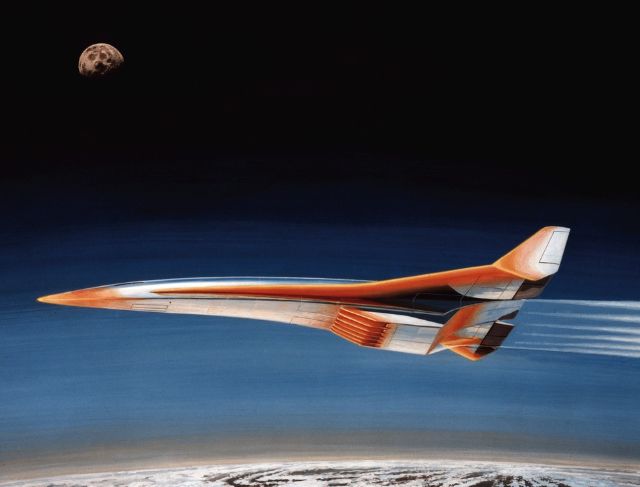
Take a flight to and from Tokyo, Japan, to the USA, and you have one full day. Long lines, cramped seats, tons of movies, and jet lag, the long-haul of air travel has always been—until now. Japan is currently testing new technology that may one day allow for a direct flight from Japan to the USA that takes less than some of our domestic flights.
While that sounds like something you might read about in a sci-fi novel, this is not fantasy; this is happening right now.
The Japan Aerospace Exploration Agency (JAXA), is working hard to develop a completely new type of aircraft to make this possible; a hypersonic passenger jet capable of speeds. If JAXA’s efforts come to fruition, it’ll be possible for passengers on a flight from Tokyo to Los Angeles to arrive in about two hours instead of today’s average of 12 hours.
What makes this initiative truly remarkable is the fact that today’s commercial “fast” aircraft is the Concorde, which achieved record speeds of Mach 2 before being decommissioned in 2003. While JAXA is testing its new aircraft, its planes are expected to travel at speeds that are greater than double the speed of the Concorde.
As opposed to normal commercial aircrafts flying at the same level between 30,000 and 40,000 feet above sea level, this new aircraft has been designed to fly much higher and cruise in the stratosphere at approximately 27 kilometers (17 miles) above the Earth’s surface. At this height, the reduction of air resistance allows the jet to fly at hypersonic speeds much more effectively than if it were flying at a lower height. As a result, this jet will be able to travel at great speeds across continents while the majority of the passengers below have only just started being served their meals on their commercial jet.
The latest test has taken place at JAXA’s Kakuda Space Center in Miyagi Prefecture, Japan, where engineers tested the ramjet engine under extreme atmospheric conditions in the engine test bed. During the test, the model successfully withstood an ambient temperature of 1,000 degrees Celsius, which is the result of the extreme amount of heat generated by the engine due to the extreme amount of drag created during hypersonic flight.
Not only does the success of the testing represent a significant technical challenge as aircraft materials will typically fail due to the extreme environment of hypersonic flight; but it also represents a significant advancement in the area of aerodynamics and combustion stability during hypersonic flight for aerospace engineers.
The next stage appears to be absolutely thrilling. JAXA wants to attach its experimental hypersonic aircraft to a rocket booster so as to try an actual hypersonic flight demonstration at Mach 5 in the Earth’s atmosphere.
You should keep in mind, however, that we won’t see hypersonic airline tickets being sold anytime in the near future. According to experts, there is still a significant amount of work that needs to take place prior to hypersonic passenger aircraft taking to the skies, including numerous successful aircraft. Developing a commercially viable aircraft could take over two decades and require numerous test flights.
Professor of Tokyo University of Science estimated that the total development timeline for the program may potentially require up to 20 years to complete due to the overall need to have multiple phases of demonstration before being commercially viable. The first phase will involve the creation of an experimental aircraft, followed subsequently by a completed passenger model capable of meeting the same standards as all other commercial aircraft.
Even at this point in time, though, the very concept of hypersonic flight has begun transforming the way people are talking about how and where they travel. Picture having breakfast in Tokyo and arriving in Los Angeles before lunch. Business travel would become very different than it is today; international tourism would likely see a significant increase; and international people could have changed significantly how they travel within the world.
Japan is not the only country pursuing a breakthrough in ultra-high speed air transportation. The main struggle each of these manufacturers face, is the ability to provide a fuel efficient means of travelling faster than sound, while also finding a way to reduce the loud sonic booms created when an aircraft breaks the sound barrier.
Those that travel frequently will need good luck, patience, coffee, and long-distance travel tips; however, if each of these projects succeeds, the future of aviation could be much different from what we know today.
The idea of travelling between California and Japan in only a few hours has moved closer to reality.