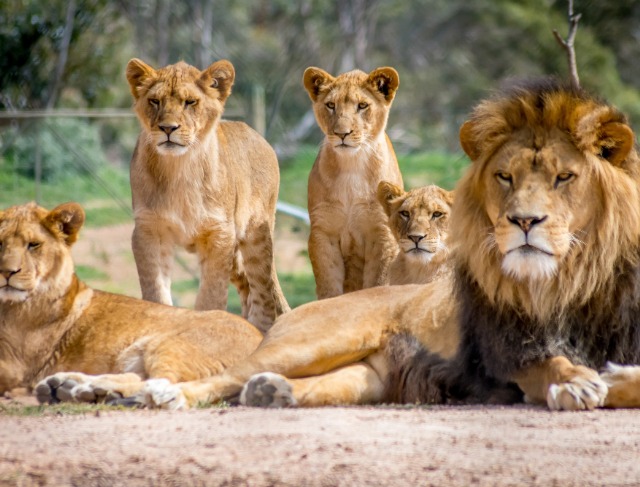
Having spent several years in dire, constricted circumstances at Lujan Zoo, 30 lions and tigers have finally been shifted to wildlife sanctuaries in both South America and the USA.
These animals had spent a long period living at a zoo whose reputation has suffered recently in relation to the serious concerns about the welfare of animals and guests. Relocation is now seen as an important step towards providing them with a more fitting habitat for the rest of their lives.
This task, which has been carried out by Four Paws, was one of the largest transfers of captive carnivores so far known to the history of animal welfare work.
The Lujan Zoo’s value is known to be situated in 70 km from Buenos Aires. The facility has stopped functioning officially in 2020 due to safety and animal welfare issues.
According to reports, before the zoo was closed, its population consisted of around 200 carnivores.
However, this number was reduced to 112 by the time Four Paws engaged with the rescue mission in 2023, and only 62 animals remained by the time this organization received the right to take over in 2025.
The conditions they were kept in was concerning.
Some animals found it hard to move around due to various conditions such as obesity, muscle wasting and other issues of frightful malnutrition. Some other animals were suffering from their teeth, kidneys, had complications of their declawing, and other unhealed injuries.
This was a clear demonstration of what it means to live in overcrowded restricted environment for a long period of time.
Four Paws has carried out a major animal relocation.
Now their relocation involved 30 lions and tigers.
According to Four Paws programme director Luciana D’Abramo, the organization had taken great steps to ensure that everything goes on well.
It has been a successful relocation which marks a progress made in the animals’ lives.
They will not be kept in small cages anymore, but will be able to live in special sanctuaries designed to take better care of them.
15 big cats are being transported to Lionsrock.
The composition of the group is as follows:
- 9 tigers
- 6 lions
The Lionsrock diffuses a different environment compared to the former zoo.
Over 80 large carnivore species have settled across around 60 hectares of space in the sanctuary. The space is meant to recreate environment more closely to the wildlife’s natural habitat.
Access to the large open area is a huge change for lions and tigers, that have been staying in concrete cages for most of their life.
Another 15 animals will get relocated to Colorado
The rest of the group comprises:
- 8 tigers
- 7 lions
The animals will be sent to The Wild Animal Sanctuary in the United States.
The sanctuary is located in the grasslands of northeastern Denver and houses a significant number of rescues.
Unlike traditional zoos, the main principle of wildlife sanctuaries is to provide the rescued animals with adequate long-term provision instead of showcasing them.
The Long Road to Their New Abodes
Moving big cats from one country to another is not an easy task.
The felines that will arrive in Colorado will make a stop in Chile on their way to the US.
The group heading to South Africa will have to face a long journey too: they will land in Johannesburg after flying first to either Frankfurt or Amsterdam and then travel by land for about 4 hours to arrive at the destination—Lionsrock.
Planning each of the journey segments is vital because lions and tigers are large and powerful creatures that require special care.
This also means that the transport boxes must be properly arranged to protect the animals and reduce their stress level.
Training Lions and Tigers to Enter Transport Containers
Most of the animals were already trained by Four Paws to voluntarily get inside their crates, which simplified their lives considerably.
Nonetheless, it was not possible to shift all animals in such a manner.
Some animals were specifically required to be sedated prior to their transportation.
On the Friday before the day of relocation, two tigers needed to be carried and transported by vets to crates.
The scene testified how arduous and laborious the procedure could turn out to be.
What reasons did authorities give for Lujan Zoo closure?
Lujan Zoo became famous due to the ability to have contact with lions and tigers.
One was able to pet the animals and take photos with them.
This form of contact became part of raised concerns about safety and welfare of animals.
In 2020, the Argentine government shut the zoo down.
At that moment, there were hundreds of big predators left at the zoo and it was a huge challenge for controlling authorities and welfare organizations.
The process of looking for a place where these animals could be kept took years.
The Animals were in a Bad Shape
When Four Paws got involved, the situation with the animals was alarming.
It is unknown how many lions and tigers were overweight to such an extent that it hindered their movements.
There were some situations of:
- Dental illness
- Issues with kidneys
- Declawing complications
- Non-healing wounds
- Bad health state
These cases do not stand alone.
As stated by Four Paws, the health state of the animals showed how they had suffered in overloaded conditions for many years.
Improvement of Nutrition and Veterinary Care
When Four Paws got involved, it initiated work on the improvement of the animals’ life quality before their relocation.
The org trained the people who worked at the zoo according to better standards of animal upkeep.
The diets were modified in order to meet requirements of lions and tigers better.
However, it was not enough for animals to be relocated after that; they should also have undergone rehabilitation.
Arrival of 30 Rescued Big Cats
The transfer of 30 lions and tigers is a significant step towards resolving the situation at Lujan Zoo.
For many years, these animals have been living in a setting that is completely different from the roomy surroundings they would normally inhabit in the wild.
Although their habitats wouldn’t bring them back to nature, the sanctuaries such as Lionsrock or The Wild Animal Sanctuary can provide them with much wider spaces and necessary long-term special care.
This is especially important in the case of animals that have spent the majority of their lives in captivity.
More Lions and Tigers Are Still Waiting
Despite the fact that the relocation is a huge success, everything concerning the problem at Lujan Zoo has not been solved.
There are still over 20 lions and tigers in the former zoo.
Four Paws is still on the look-out for the proper long-term homes.
Looking for proper sanctuaries is not simply about finding a vacant place. The large predators require special facilities, veterinary care, proper diet, experienced staff, and enough land to live comfortably.
Therefore, relocation must be planned individually for each particular animal.
From Constricted Enclosures to Expansive Sanctuary Landscapes
The tale of Lujan Zoo animals points to the considerable contrast between merely keeping wild predators in confinement and truly providing them with long-term sanctuary care.
The dealings of the animals cannot reverse years of confinement.
Some will likely suffer from diseases due to their past life.
As far as the nutrition, veterinary care, larger space, and more adequate care practices go, such things can offer them the opportunity to enjoy a better quality of life than they did before.
For the 30 wild animals that have been relocated, the movement signifies more than just a change of place.
The Rescue Mission Is Not Complete Yet
The successful relocation of 30 animals is a significant achievement, but Four Paws still has to deal with the task of providing homes to the other lions and tigers.
This situation also shows how the well being of captive animals requires a certain degree of planning and management.
The animals that were kept in a zoo in concrete cages will now be able to spend time in something very different from all those years of confinement.
Some of them will be going to Lionsrock located in South Africa, while others will be given the chance to start their new life in a sanctuary in Colorado.
After being stuck in adverse conditions for such a long time, these 30 lions and tigers can finally enjoy better living conditions intended for taking care of their needs and aspirations.
Their relocation does not change their past but provides them with the opportunity that they have been deprived of for a long time.