Japan has a reputation for transforming mundane aspects of life into remarkable experiences, and even a public toilet in now being transformed into an attraction.
In Takamatsu City of Kagawa Prefecture, more than ¥100 million, which is equivalent to about Rp11 billion, has been spent by the local authorities to refurbish a public toilet at JR Kinashi Station. The toilet has been designed into an artistic landmark.
This unusual move has attracted attention not only because of its design but also due to the huge amount of money spent.
Art Installation Made of Public Toilet
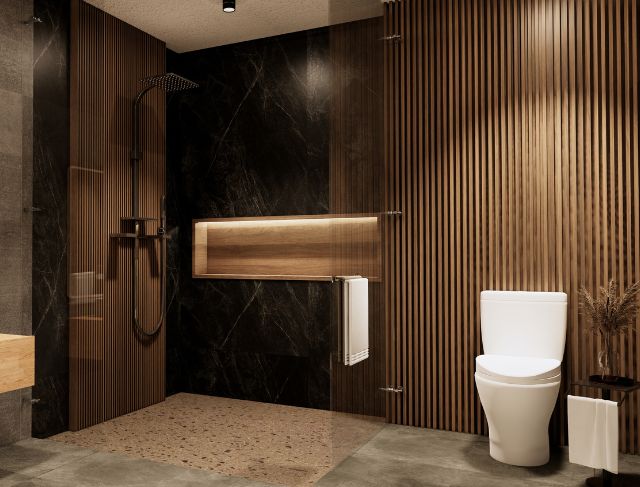
During the day, the toilet looks quite ordinary, but with its modern style, it does now resemble a regular public toilet.
However, after dusk, when the whole thing gets illuminated, it obtains a totally different concept.
The toilet is used for projection mapping involving spectacular lighting effects combined with music.
The initial performance takes place from 7:15 to 8:00 pm, while the latter takes place from 8:20 to 9:00 pm. Thus, for people arriving at the station at night, the toilet can serve as an unlikely hit visual attraction at the station.
Wings of Light at the Entrance
The toilet has become popular thanks to the main attraction of the show – a pair of glowing pink wings on the toilet’s exterior glass wall. Coupled with the music from the piano, the video creates a performance much more theatrical than a normal visit to a toilet.
As the show continues, the wings turn from pink to white.
At the end, the wings disappear, and feathers seem to scatter around the wall.
The Toilet Was Once Old and Unpleasant
The new attraction is a major departure from what used to be at the site.
Originally, before the remodeling, the site was an aging unisex public toilet that, reportedly, had drawn complaints from local residents.
The toilets used to be squat toilets while it had deteriorated to the point where it was dirty and outdated.
Instead of repairing the old facility, the prefectural government decided to build a new building.
The goal was to improve sanitation and convenience but also to create something that could contribute to the identity of the area.
The Toilet Project That Cost ¥100 Million
The construction cost nearly ¥100 million, which is approximately Rp11 million based on the cited data.
The price leads to the conclusion that the project was impressive.
It is widely considered that public toilet is simple infrastructure piece. In Takamatsu, however, this institution was regarded as an opportunity to combine public facilities, art, tourism, and community development.
The new facility is expected to serve around 600 passengers using the station on a daily basis.
According to the local population, it is a significant development when one compares it to what was before.
Why this luxury restroom will be built near the train station?
The initiative is intended to show how one can conceptualize the idea of public facilities.
Rather than merely serving as a place for visitors to relieve themselves, the new restroom is developed to become a recognizable landmark.
Its position near JR Kinashi Station plays an important role.
Train stations can provide visitors with their first experience with the respective area and are therefore an important factor. The development of the glorified restroom aims at creating a positive first impression about the area among travelers.
The night projection show provides one more reason for people to stop and watch the place.
Art and tourism brought together.
Apart from that, it is aimed at supporting young creators by promoting their artistic ideas in the region.
Youths living in the region are encouraged to present their proposals of projection-mapping designs.
This gives one a unique chance to showcase their work. The project is more than just a construction initiative but rather aims at implementing an art project and providing an educational opportunity.
In this project, youngsters will learn how to create visuals for the public space, hence the community will have new art that will serve to attract visitors.
A New Landmark for Takamatsu Public utilities are rarely considered a tourist attraction, however, the new initiative aims to change this notion.
The restroom has a chance to become a minor landmark in the area, since at night its appearance will be completely different from all conventional toilets.
Projection mapping has become a popular option for building transformation without any changes to the construction.
In our case, the technology allows us to transform the plain glass entrance and facade of the building into a temporary screen for animated art work.
The end result will be some place that will serve practical and cultural needs of the society. Residents Are Happy About the New Toilet Residents’ impressions of the new toilet are mostly positive.
Dealing with the old functioning and badly maintained toilet equipped with the amenities is already an improvement.
What is more, the artistic feature adds extra identity to this project. Residents can identify their toilet as an unusual place in their community rather than just another public toilet.
Small landmarks can be effective in establishing a city’s branding in the tourist market.
However, the question is whether the investment was worthwhile.
At first blush, the excitement surrounding the visionary project seems to make sense, but residents are not sure about whether spending ¥100 million on a toilet is a good investment for taxpayers’ money.
Heavily debated, the topic seems quite legitimate.
When contemplating about a public object which costs around ¥11 billion, citizens want to know what it can deliver.
Will tourists come to enjoy the toilet?
Will tourists stay in Takamatsu longer?
Will the object attract enough attention to be justified?
Answers to these questions may take years to emerge.
Luxury Toilet: Can it Attract Tourists?
The notion of a luxury toilet may seem strange, but tourism can usually be based on surprising activities.
It has an interesting history, a unique look, performances in the evening, and a tie to the local artists.
These factors could make it good for social media, since unexpected places can gain attention rapidly.
A person who sees the photos, or videos of the lighted wings that are displayed on the public restroom may want to know where the place is and what else the city can offer.
The power of social media could help.
The visual quality of the attraction provides a good opportunity to get noticed online.
A regular public restroom would not be a popular subject of travel photographs.
But when there is a building with the great projection mapping, the situation changes.
The lighted pink and white wings, feathers and music create the atmosphere that is easy to be photographed or filmed.
If these photos could continue being shared, the restroom may become recognized not only in Kagawa Prefecture, but much wider.
Tourism investment is a slow process
The main question is whether the investment will pay off.
It takes time for revitalization projects to yield results.
A new attraction needs time to get established, become popular, have its name heard in the travel industry, and spread on social media.
The same is the case here.
The municipal government has invested heavily in a facility combining services, arts, and tourism. Whether it works or not will be determined by whether the attraction draws visitors and whether the visitors help the overall economy.
More than just a toilet
A peculiar initiative in Takamatsu shows how cities can experiment with unusual tourist practices.
Normally, the toilet would be a forgotten element of the city infrastructure.
What is different about this project is that the building is designed to be striking.
It is used as a public toilet during the day and becomes a projection mapping venue at night. Besides that, it is used as a platform for students and young artists to show their skills.
Will Japan’s Lavish Toilet Attract Tourists?
That must remain to be seen.
The amount spent, almost ¥100 million has indeed sparked a lot of conversation. The discourse involves the building itself, the art produced there, and whether spending this large a sum is warranted.
To date, attention alone has thrown Takamatsu and nearby attractions into the limelight.
Attention, however, does not convert into actual tourist money.
The real question is whether the visitors will keep coming for projection shows and attracted to explore the area which surrounds the attraction and whether the project contributes to the local economy at all.
As it stands, Takamatsu has made something out of the ordinary as it will turn out.
A previously mentioned place that used to be thought of as old, dirty, and obsolete has undergone a metamorphosis into a modern public space with art and entertainment at night.
It is yet to see if it will link to something like a tourist attraction or simply become one of Japan’s priciest and weirdest public toilets.