There is now much discussion in Washington D.C. about a major memorial that is associated with Donald Trump. The discussion is more than political in nature; there are concerns regarding how a proposed construction might affect air traffic around one of the busiest airports in the U.S.
The memorial project is a triumphal arch that could go as high as 279 feet above the ground near the Memorial Bridge in Washington D.C.
This monument would be located less than 2 miles from the Ronald Reagan Washington National Airport (Reagan National) which is already famous for having challenging flights paths and limited space to maneuver into position to land.
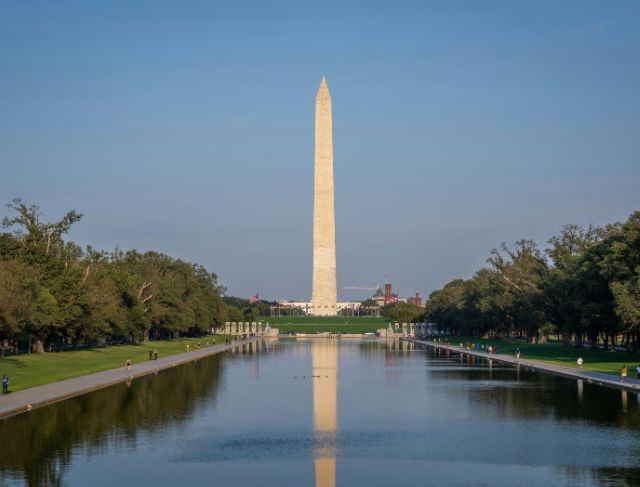
For example, it is difficult to fly to Reagan National due to the fact that, when pilots are flying to the airport, they have to navigate around major landmarks like the Pentagon and the Washington Monument. that there are a limited number of times a pilot can fly into the airport without the risk of exceeding the Altitude Limit imposed by the Federal Aviation Administration (FAA) and/or US Department of the Interior.
Given the fact that the proposed monument would be constructed within the restricted air space already around Reagan National, the FAA has kicked off an aeronautical evaluation of whether it will be able to safely operate into the Washington region once the memorial is completed.
Structures over 200 feet tall must be reviewed by the FAA. Depending on the complexity of the project, the review process can take several months to nearly a year.
This project is considered complex.
The air corridor in Washington DC surrounding Reagan National Airport has significant amounts of traffic every day with over 900 commercial takeoffs and landings according to FAA data over a 24-hour period.
With an enormous amount of traffic through Washington’s airspace there is little room for new obstacles with regards to building.
Safety concerns have always been very serious in recent years because Washington has such a volatile aviation history. Previous fatalities between commercial and military aircraft have caused regulators to tighten these procedures within Reagan National Airport.
Because there is a history of these types of events, some aviation officials are concerned that small changes to the skyline of Washington DC may put additional operational pressure on both pilots and air traffic controllers, due to the additional safety considerations that will need to be made.
Many of the individuals involved in reviewing the project believe that they could potentially be forced by the government to make a decision with no regards to the aviation or design safety issues surround project.
A source close to the review meetings is reported to have raised concerns that those agencies responsible for oversight of the project may feel pressured to continue with the project regardless of any potential flaws.
Still others see this monument as a national symbolic landmark project and a tremendous visual landmark in the city of Washington D.C.
This monument’s initial design has already been approved by the Commission of Fine Arts’ Pre-Design Review; a revised version is due to come before them again in late May 2026.
But the discussion about this project continues to grow.
To many, and particularly among those who live near where the monument would be located, as well as those in the aviation industry, the question isn’t whether the monument itself would be the next marvel; rather, the question is whether it is worth the potential safety risks of building such an immense structure so close to one of the world’s most active airports.
With a city that has many monuments, designated restricted zones for certain types of air traffic, political influence, and virtually nonstop airport activity, one new building in that space can result in very complex discussions.
Especially when the potential new building could essentially go into the path of one of the busiest flight paths into and out of the United States.