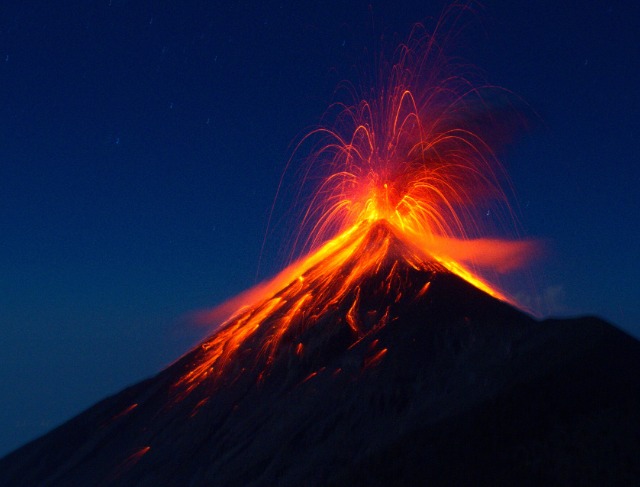
Mount Etna has been one of the most famous volcano tourism destinations in Europe for a long time. Being Europe’s tallest volcano, Mount Etna has attracted lots of people that have signed up for tours. Dangerously active as it is, the area surrounding the volcano is unpredictable due to variability in volcanic activity as well as erratic mountain weather.
The danger was manifested in the life of a 29-year-old American tourist who died when he was hit by lightning on Mount Etna on Sunday, August 16, 2026.
The tourist from Kansas was found at an altitude of around 1,400 meters in the area of Rocca Capra on Mount Etna.
The incident happened during nighttime while the tourist was in an exposed area of the mountain with no trees or other natural shelters in close proximity to him. Thus, when thunderstorms erupted very quickly in the area, the tourist was left unprotected.
The rescue team was sent to the volcano by helicopter at around 8:00 PM local time.
The wounded tourist was taken to Cannizzaro Hospital in Catania after being found. However, emergency responders declared him dead shortly after his arrival.
A Sudden Thunderstorm Develops and Causes Death
Weather in mountains can change suddenly and rapidly, and the conditions surrounding the active volcano make a risky situation even riskier.
In this instance, reportedly, an unexpectedly severe storm was formed.
Lack of tress above the tree line suggests there are very few places where people caught out in such weather could hide.
For trekkers, open slope of the mountain is a very dangerous place because in case of lightning hits, they become a very high object on the geological average landscape.
Mount Etna has active Volcano activity
The lightning strike took place during the process of Mount Etna still being active.
Moreover, because of the fact that the volcano had been erupting, parts of the Mount where tourists could go had been closed.
The eruptions affected not only the Mount itself, but also caused the airport in Catania to be closed for some time a week earlier.
It is considered unknown whether the tourist has stepped into a forbidden area or not.
Despite being uncertain, it must be understood that hazardous situations were present in the mountains.
Hiking an active volcano is a hidden danger
Mount Etna is an excellent natural site, but popularity of the location may make visitors less aware of dangers.
This is not a straightforward hike like any other because an active volcano creates lots of dangers.
Visitors need to overcome the effects of volcanic activities, unstable terrain, ash, bad weather, and extreme exposure at higher altitudes all at once.
Because of these effects, it is difficult to forecast the conditions of the hike even for experienced hikers.
What seemed to be an easy hike might suddenly become a dangerous adventure because of adverse weather conditions.
Another Threat from Volcanic Lightning
One interesting and uncommon danger that may accompany volcanic eruptions is the presence of volcanic lightning.
Lightning does not depend on the occurrence of typical rainstorms.
During an eruption, a great deal of hot rocks and ash is hurled into the air. Their movements lead to collisions and building up of electric charge in eruptive plume.
This charge can initiate inborn lightning in or around volcanic cloud.
That means that due to the activity of volcanoes, there may be dangerous electrical activity while weather around does not display the characteristics of a usual thunderstorm.
How Volcanic Ash Creates Lightning
The process starts when the large number of particles is released into the atmosphere.
The collision of ash and rock pieces with each other separates their electric charge and provides for the accumulation of static electricity in the plume.
Once electrical potential gets large enough, lighting may take place.
For those people who are located near volcano, this additional danger might not be obvious at all.
Lightning has taken more lives on Mount Etna than eruptions.
According to the local authorities, in recent years, the number of lives claimed by lightning strikes on Mount Etna has exceeded that of volcanic activity.
The last reported death due to an eruption was in 1987, as per the information shared by the local administration.
That indicates the fact that often the most evident danger on an active volcano is not the cause of the maximum number of deaths.
For example, weather hazards may be even more dangerous.
A Notable Tourist Destination Which Doesn’t Lack Danger
Mount Etna’s fantastic nature has made it well-known throughout the world.
Tourists come to admire the beauty of the mountains and the significance of the volcano, which is a must-see destination for anyone visiting Europe.
But the very geological factors which make Etna interesting can also create risks.
Due to the fact that Mount Etna is an active volcano, the weather can change quickly.
Officials Had Already Limited Access to Some Areas
Before the fateful event took place, officials had imposed restrictions on certain places on the mountain.
The restrictions were imposed because of the volcano’s active state at that moment.
It is still not known from the available information if the tourist from America was in one of the affected areas.
The details have not been clarified in the information source.
It is known, however, that the accident took place during a period when Mt. Etna was active and authorities already took measures for visitors’ protection.
The Tragedy Proves that Mount Etna is Unpredictable
This tragedy reminds us that volcanoes cannot be regarded as regular tourist destinations.
Even if the mountain looks quiet and there is no imminent eruption, the techniques might be hazardous because of the weather and rugged landscape of the mountain.
Lightning strikes very quickly, especially if there is no cover from the elements.
For tourists, volcanic eruptions and rapid changes in weather should not be taken lightly at any moment of the trip.
Safety Should Take Precedence Above All
When visiting Mount Etna, people can take in breathtaking sights, although gaining access to these breathtaking spots should never mean disregarding safety measures.
Whenever authorities place a ban on areas on the volcano’s surface, it is for the purpose of making sure people are protected against unpredictable dangers.
The weather reports are important in this respect as well, although at high altitudes, it can change way faster than tourists predict.
The unfortunate case of one of the American tourists serves as a reminder that an innocent adventure may actually lead to a tragic turn of events.
Mount Etna Remains a Great but Dangerous Destination
It is highly likely that people will keep visiting Mount Etna simply for the sake of exploring its unique sites since the location has much to offer when it comes to natural beauty, geological significance, and even ongoing volcanic activity of the site.
However, one needs to remember that it also involves certain risks.
The accident that happened to the young American tourist proves that danger can strike anytime and mostly not as a result of an eruption of lava. An unexpected storm, hazardous terrain, or even volcanic electricity.