
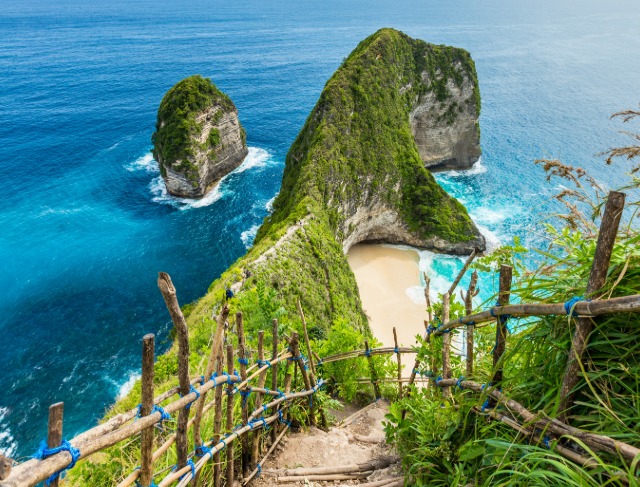
Fodor’s Travel Guide listed Bali in the “No List” for 2027. This list includes eight travel destinations that travelers are counseled to think twice before going due to the effects of overtourism. The guide informs travelers that many places on the list are threatened by the high number of visitors.
Fodor’s Travel Guide pointed out that appearing in this list does not mean that these destinations are not worth visiting anymore. The intention of the recognition is to raise awareness on the need for these places to recover after being affected by mass tourism.
The 2027 list features several other travel destinations along with Bali such as the Albanian Riviera (Albania), Amalfi Coast (Italy), Edinburgh (Scotland), Corsica (France), Kyoto (Japan), Ngorongoro Conservation Area (Tanzania), and Sedona (Arizona, USA).
Reasons Why Bali Faces Issues Related to Overtourism
Bali is one of the Asian places mentioned in the report. The fast growth of tourism in Bali has put pressure on the environment, especially in terms of increasing air pollution and losing agricultural land.
Changing land use has emerged as one of the biggest threats that have changed agricultural land into tourist residences and different facilities. However, increasing vehicle movement as well as movements of the tourists bad air quality.
The island has been on the Fodor’s list of warnings previously, particularly in 2020 and 2025. Although it was not on the list in 2026, it made its appearance for 2027. Among the facts that were brought up previously were waste treatment, plastic pollution, the uncontrolled development, and the impact of tourism on local communities.
The latest edition lists air pollution as a result of waste burning, the reduction of agricultural land, and the increase of pressure on water resources.
8 Destinations Under Threat From Tourism
At the very top of Europe’s list of locations under tourism pressure is Albania’s Riviera. This coastal region was much sought after among tourists in 2025 with 12.47 million visitors added to its account. There was an increase of 5.3% in the tourist arrivals in the first half of 2026, making the pressure experienced by coastal towns, infrastructure facilities, and marine ecosystems even greater.
Italy’s Amalfi Coast also has the same challenges. Positano is reported to have welcomed 132,551 tourists in 2023 being inhabited by only 3,729 people. Problems caused by heavy traffic, rising accommodation prices, and environmental threat such as landslides and flooding are among the problems.
In the capital city Edinburgh short-term rental development along with seasonal events also results in considerable pressure on the housing situation and the public utility facilities. Such a situation is also observed in Corsica where the summer period witnesses more than double population growth.
As for Asia, Kyoto is among the tourist locations that also experience the pressure along with Bali. Record number of tourist arrivals leads to problems with public transportation and the daily routines of locals.
From 2024 to 2025, a total of 1.06 million visitors stayed in Ngorongoro Conservation Area
Nonetheless, Sedona, which hosts almost three million tourists each year, only has a population of around ten thousand. The surge of short-term vacation rental businesses has made it difficult for locals to afford homes.
Cautions about Popularity
As per Fodor’s, the destinations are deemed to be experiencing over-tourism. The locals feel the impact of mass tourism through the heavy influx of people resulting in heavy crowding, major constructions, use of vacation rentals, and having to find a way to host millions of visitors.
Thus, the 2027 No List serves as a reminder of the importance of sustainable travel.