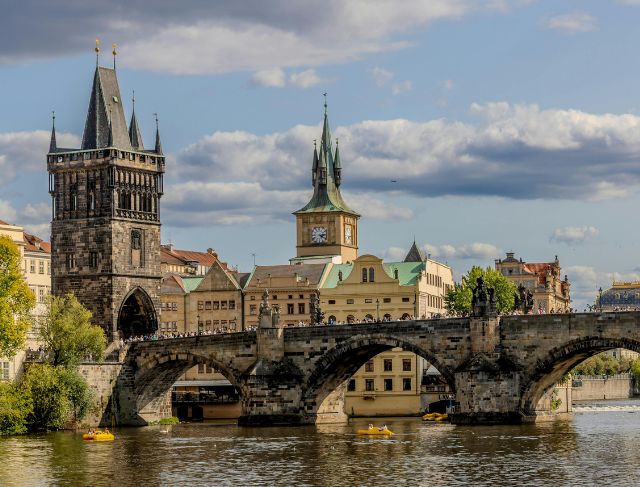
Travelers do not cancel their travel plans because they don’t feel comfortable traveling to a region experiencing uncertainty; they simply change their destination. Currently, Europe appears to be the destination of choice.
Yes, Europe is not only a popular travel destination—Europe has become the world’s “safe haven” for travelers.
In the Middle East, tensions between the U.S., Israel, and Iran, compounded by military activity, have resulted in changed travel patterns. Airline schedules are disrupted, travel routes are longer, and growing uncertainty of when—if ever—things will settle down.
With travelers heading to various locations in Europe instead of the Middle East, this is not because Europe is emerging or trending; rather, Europe has become predictable to travelers.
The World Travel & Tourism Council has provided evidence of this shift. The total number of international tourist expenditures (550 million euros) is currently frozen or inactive in the Middle East due to current conditions.
Before these tensions started, the Middle East was experiencing substantial growth as both a destination and a major global transit hub for international visitors; it represented approximately 5% of global incoming tourist arrivals and about 14% of international transit passengers.
When things become stagnant at one location, it has a ripple effect around the globe.
Travelers are influenced not only by various price points, but also by features such as attractions and how they perceive safety.
For many years now, there is a general consensus that the regions have built/re-established relationships because they enjoy such political stability, a developed functional infrastructure, and well-established aviation networks connecting many countries to one another; therefore, when travellers have uncertainty in some part of the world, they are likely to choose to visit those locations that they believe have long-standing, dependable relationships.
To that end, certain European countries will undoubtedly benefit the most from redirected travellers.
Countries that border the Mediterranean Sea (e.g., Spain, Italy, and Greece) are expected to receive the largest share of redirected travellers from other countries; their favourable climate conditions, wealth of cultural offerings, abundance of beaches, and proximity to major travel markets make them favourable destinations for many.
Additionally, another phenomenon is emerging that will impact traveller behaviour and trend towards more frequent intra-regional travel.
More specifically, instead of travelling long distances (higher cost) and through multiple hubs (complicating travel), travellers are opting to take shorter journey lengths (lower-cost) with fewer stopovers because they want to minimise the effects of higher travel costs due to disruptions in the aviation industry.
Not only does it depend upon where you go, but it also depends upon how far you are willing to fly.
While this is great news for European tourism, it doesn’t mean everything is rosy.
A number of locations are already facing difficulties caused by overtourism — with tourists overcrowding many of the most well-known locations, with big crowds at attractions, with costs of living — has long existed prior to this shift occurring.
As a result of over-tourism, many tourism-related professionals (i.e. hoteliers, restaurateurs, etc.) are moving towards discussions regarding management instead of growth — this includes tourism distribution across several areas in Europe, addressing peak season vs off-peak season vs shoulder season, and working to improve coordination between both the private and public sectors.
Too many tourists at a specific destination and/or too many tourists visiting a specific location during certain periods can create a completely different situation with respect to travel.
So yes, Europe is certainly a “plan B” for many travelers.
Should this trend continue in any capacity, it may not only serve as a “plan B” — but can also change tourism patterns in ways you wouldn’t even think.