
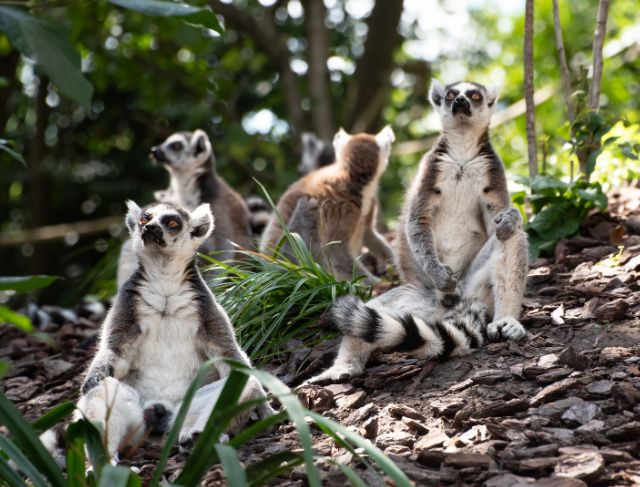
Lemurs will become extinct due to human activity and the way at least one group of humans views lemurs as a deluxe food item, not just climate change or their predatory environment.
Before going into why this event was allowed to happen, there is a second spoiler alert: there is a very high demand for lemurs, the trade is covert/unregulated, and researchers within the scientific community are frustrated with a lack of information.
Between late 2022 and early 2025, researchers investigated a conservation issue and found shocking numbers that have left them feeling like they were lost in space. They interviewed approximately 2600 individuals, including hunters, suppliers, and buyers in 17 of Madagascar’s largest cities. What they found was that thousands of people didn’t know that there was an underground market for lemur meat.
At least 13000 lemurs are hunted each year for local consumption. More than 1300 lemurs are being butchered and delivered to restaurants across Madagascar and served to customers thinking it is an upscale meal.
Lemurs are struggling, too. They’re struggling not just because of the trend of “luxury meat” markets, but they’ve already been battling against habitat destruction, deforestation, and poaching prior to that. According to the IUCN, more than 90% of all 112 species of lemurs are currently classified as critically endangered.
You would think that’s bad enough.
Think again. Humans have now added to the list of threats to lemurs by creating the desire for lemur flesh.
The Reason Why Humans Want Lemur Flesh (And Why it Makes No Sense)
This is where the entire situation just gets beyond ridiculous. The fact that lemur flesh commands such high prices creates a black market demand for it. Many wealthy consumers see it as both healthier and stronger than any other type of meat and may even appreciate the benefits of its anti-aging properties. Some say that it tastes really good.
The two species of lemurs who end up suffering the greatest from this practice are:
Brown Lemurs — classified as “vulnerable”
Woolly Lemurs — classified as “critically endangered”
The sad reality is that these are not just environmentally endangered species, but they are becoming extinct, and that adds to the appeal for consumers of these items.
The Trade Is Essentially an Unseen Marketplace
Lemur dishes are available in more than a third of the surveyed cities; however, close to 94.5% of all transactions take place in private settings. There are neither public menus nor signs indicating their availability, nor are there any vendors openly selling them. These chances to buy and sell endangered species occur only between trusted suppliers and clients, as if they are part of a secretors private club.
As the Research Teams Completed Their Studies, Researchers Became Angry
As scientists completed these studies and began writing about their findings, they indicated that they are becoming more alarmed about finding solutions to protect future populations of animals and plants. Researchers of this type are normally working with conservation organizations to find ways to preserve endangered or threatened populations, such as creating protected areas where endangered species can reproduce freely, raising public awareness about types of diseases associated with eating lemurs or other exotic wildlife and developing alternative income sources for hunters, so that they no longer have to rely upon the illegal wildlife trade to survive.
Saving these animals and creating ways for humans to continue living sustainably together is a critical objective of these conservationists. However, until the cycle of illegal wildlife trade is stopped, the protection of both animals and humans from diseases will never happen.
The Issue with Human Desires
The extinction rate of animals increases due to hunting for status. This is not traditional hunting or subsistence hunting; this is a luxury market created by people’s interest, misinformation, and the idea that having something rare equals having something valuable.
By following this mentality, humans are erasing life from this planet.
Lemurs are icons. They are native to Madagascar and nowhere else in the world. Although they are popular, they face the greatest threat because of consumption. Without strict law enforcement, real alternatives to illegal hunting, and massive public education, the crisis cannot be prevented.
What is truly frightening about this situation is that:
From a mathematical perspective:
If humans consume lemurs at a rate faster than lemurs can reproduce, they will go extinct — no exceptions.
Currently, that reality is happening.
