If that was the only criteria, the answering of the question would be a lot less complex. Scientists analyze many different factors such as geology, biology, and human history when determining the difference between a continent and an island.
This is why Australia is classified as a continent, while Greenland, despite its massive size, has yet to receive the same classification.
Most people become aware of this controversy when looking at the world map; Australia and Greenland both appear to be large areas of land surrounded by water. At first glance, they appear to be relatively similar in appearance; however, geography textbooks classify them in completely different groups.
Australia exists on its own tectonic plate known as the Australian Plate. This geological independence is one of the main reasons scientists consider Australia to be a continent in its own right. To put it another way, Australia is not just a giant landmass but an entire continent on its own tectonic system.
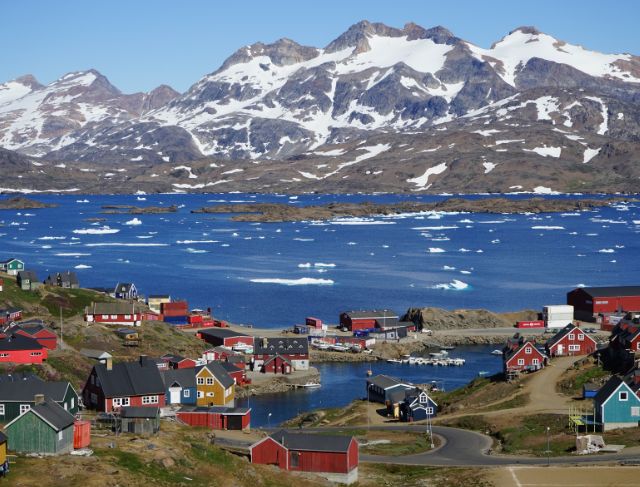
The case of Greenland is different. Therefore, even though in millions of years it has drifted and changed, geologically it is still considered to be part of the larger North American continental framework, not as a separate continent.
Geological factors are not the only consideration.
Australia’s geological isolation over millions of years resulted in the development of unique plant and animal species. Many of Australia׳s native animal and plant species (eg, kangaroos, koalas) were developed independently from those of the rest of the world, leading to the creation of one of the world’s most unique ecosystems.
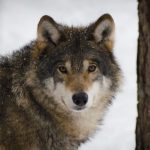
By contrast, Greenland does not demonstrate at least as much biological distinctiveness as Australia does. For example, most of the animals, such as polar bears and Arctic wolf and plants such as tundra vegetation, exist in other areas in the Arctic, such as northern Canada, parts of Scandinavia, and other polar ecosystems. Let’s set aside the scientific methodology for a moment.
Indigenous Australians have lived in connection with their ancestral land in Australia through their cultural tradition, ancestry, and history. Over thousands of years, communities of Indigenous Australians evolved in the isolation of the Australian continent, and their identity became strongly identified with the continent itself.
Alternatively, the Indigenous peoples of Greenland (the Inuit Nation) developed differently. Their history, culture, and ancestry tie them to Indigenous peoples throughout the Arctic region, including the northern parts of Canada, Alaska, and eastern Siberia. This larger cultural network supports the idea that Greenland is part of the Arctic, rather than being a separate continent.
Interestingly, there is no description of a continent that can be said to be a perfect definition. Interiors and islands are commonly defined as pieces of land found in a body of water.
Due to an abundance of evidence, modern scientists do not base their conclusion on such things as a single line of evidence.
While Greenland is larger than most nations if size alone were criteria looked at in deciding whether or not to grant Greenland’s island status, scientists will use other evidence besides measurements of size in determining continent status.
Being an actual continent is more than being big; it is also a type of place that has geological, biological, and usually cultural characteristics that set it apart from its neighbours.
Although Greenland has an impressive surface area (over two million square kilometres), its geological makeup suggests otherwise as it remains connected to North America geologically, has much of the same fauna with other parts of the Arctic, and has significant cultural ties to Indigenous peoples of the Northern Polar hemisphere.
When considering this aspect, therefore, although Greenland houses the title of `largest island’ in the world, Australia falls into another category altogether; it may not be a matter of size but of the evidence that suggests that underneath the surface there exists a whole other continent.