South Korean internet users feel sorry for Taiwanese visitors who wore badges that stated, “I’m Taiwanese, not Chinese.” An ordinary-looking badge generated international attention; what a shock! It’s hard to imagine even getting to this point when the connection between politics and shopping for souvenirs seems to have blurred so much – i.e., it’s difficult for me to imagine that a piece of jewelry, especially one representing Taiwan, would generate such interest.
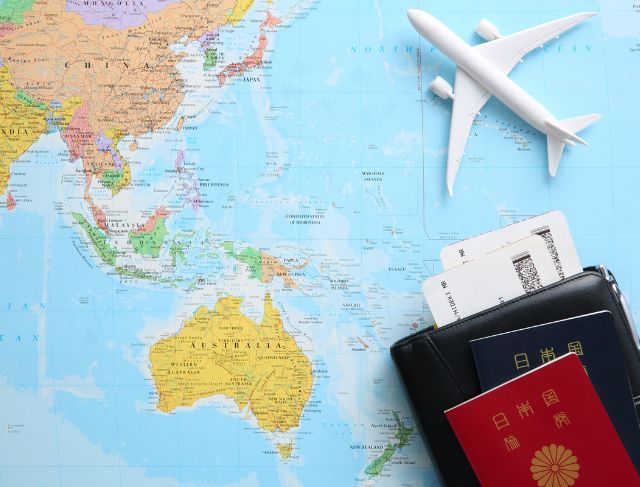
When an individual from China posted images of himself publicly on the internet carrying his Taiwan passport cover while traveling to Japan, essentially stating, “I am NOT carrying a fake passport” or “I am NOT using forgeries of any type,” etc., that began to make a LOT of fuss. All he did was to put a Taiwan passport cover on his passport for aesthetic/safety reasons, similarly to putting a protective case on your cell phone. He noted that it was easier to carry that way and to avoid possible confrontation or harassment with the ongoing conflict between Japan and China.
Within seconds, the internet lit up! Initially, there were no comments about national humiliation or trolling asking where to buy Taiwan passport covers; instead, the comments were simple and innocent. Everyone was essentially aware that it was another travel-related item thrown into a suitcase without thinking it would become a huge point of controversy. The questions surrounding this incident were simple: how did the world get to this point? Why is it that there seem to be no limits to the type of things we are willing to use against each other? Is this the start of a new wave of pride in Taiwan? Is it just a continuation of the struggle for independence from China? What does this mean to the Taiwanese people? Where will it go from here? I suppose we’ll have to wait and see!
The global reactions to the revelation of this incident have been swift and plentiful, with opinions falling into several categories:
- Doubts regarding legality.
- Claims that the act disrespects China.
- Recommendations for products related to the incident, including “Where can I purchase one of those covers? Will it be available on common e-commerce platforms, like Amazon, eBay, etc.?”
Suddenly, everyone seemed to be an authority on international identity and all types of writing implements.
Along with the multiple comments being made on this thread was another from Korea, discussing the way Taiwanese travellers perceive themselves within the current environment.
Due to anti-China sentiments growing within many areas in Asia, it appears Taiwanese travellers now feel the necessity to wear badges or pins saying “I’m from Taiwan”. Not to generate more attention, but to avoid being mistaken for a Chinese traveller.
Images of the pins began circulating throughout Korean social media. The response from many people was one of embarrassment (not anger).
Many netizens expressed remorse for the behaviour of such a few, with statements like:
“Only a small minority acts this way. Most of us are not supportive of hatred and I’m truly sorry.”
Imagine feeling compelled to apologise via social media. Now that should take this incident to the tipping point.
Holiday/travel regulations, politics, and labels should not be considerations during a simple holiday.
Yet, here we are:
A traveler is using a Taiwan-style passport cover while in Japan. Other travelers are wearing identity pins in South Korea. You can also find comments in social media turning into a de facto international forum.
In a world filled with people simply wanting good food, good photographs, and relaxation while traveling, it is astonishing the amount of drama caused by something so small as a simple passport sleeve.
There is a cover and a pin, for example, and they assist travelers navigating foreign grounds where nationalistic hostilities extend into ordinary lives.
It is messy. It is awkward. It is extremely, very internet.
Perhaps this represents the true story – not who is using what, but rather how fragile has become the concept of just going on a vacation when you have to deal with the political aspects of security screening at an airport.