
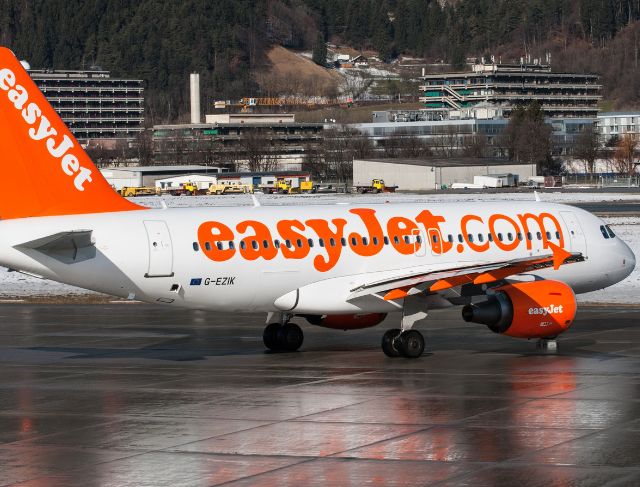
An easyJet flight from Hurghada, Egypt, to London made an unexpected stopover in Rome after the crew received a report from a passenger about how a power bank was being used to charge something inside a bag in the cabin. The flight had completed most of its trip at a cruising altitude of 36,000 feet before being redirected towards Italy.
Due to the potential risk associated with the implementation of lithium ion batteries, especially those which have been damaged or are causing excessive heat, the flight crew decided to land in Rome as a precaution. Even though there had been no fire or heat detection on board; the crew acted in order to protect the safety of all passengers. The incident emphasizes the seriousness with which airlines have begun to treat the risks associated with lithium-ion battery usage.
There are now more than 20,000 powerbanks in existence that have been tested and certified to be safe for travel. However, powerbanks are now viewed as a significant aviation safety risk, as they can ignite rapidly once they have been damaged. Cabin crews have received training on how to deal with any report of an overheating battery or unauthorized charging, and throughout this incident the crew were notified by a passenger that they were able to charge their own devices on board, triggering a precautionary response by the cabin crew.
The aircraft eventually landed safely at Rome Fiumicino Airport late at night. Passengers were then provided hotel accommodation and meals before continuing their trip to London the next day.
That may sound a bit like a drama to a traveler, as we are told they are used continuously during travel. But the airlines and aviation authorities globally have become stricter, for it takes only a little problem with the battery in a pressurized cabin for danger to arise.
Already in 2026, several airlines have changed the regulations. A few have banned the use of power banks during flights, while others require that they be visible and not put away in overhead luggage while charged.
With such escalating concerns, backed by actual events, aviation authorities have recorded hundreds of battery-related cases over recent years, where overheating devices, smoke events, and small cabin fires tied to lithium batteries were present. Most incidents were handled safely, but risks are so severe that regulators periodically trot out the safety rules for their revision.
Despite the many rules associated with power banks, a traveler may also not have a complete understanding of those rules. Some travelers believe they can put their power bank in any part of their luggage, while others are unaware that charging a device in their luggage is against airline policies.
Experts agree that an excessive amount of heat being generated by a battery in a compressed space where there is no possible way for the heat to dissipate is one of the greatest risks associated with battery malfunction. If an unstable battery is in close proximity to other materials inside a bag, those materials can rapidly accelerate the intensity of the situation.
Because of these risks travelers are increasingly being encouraged to only store their portable charger in their carry-on luggage, never attempt to use a damaged battery and never leave a charged device unattended during flight.
The easyJet diverts flight also demonstrates that airlines now take precautionary measures rather than waiting until there is an emergency. While diverting an airplane may appear to be very costly and troublesome for the airlines, they prefer to make necessary safety decisions for possible battery hazards as early on as possible rather than having to react to an emergency situation 30,000 ft. in the air.
While passengers experienced delays and frustration due to an unexpected stop in Rome, the decision to divert the aircraft because of lithium battery safety is no longer negotiable in the airline business.
Now that the international travel sector continues to grow in 2026, airlines and airports are expected to tighten battery restrictions further. Portable electronic devices are a necessity for today’s travelers, but as airports and airlines become more strict about what and how travelers are allowed to pack their portable electronics, the days of traveling without a second thought about power banks may be coming to an end.


