
What if you woke up tomorrow and it was a Wednesday? That would no longer be a day off for fun, but rather because that’s what is happening currently in Sri Lanka.
Rather than adding another workday to the week, Sri Lanka’s government made the decision to eliminate one day of work each week for all public institutions throughout the country (such as schools, universities and government offices). The rationale for the change is not based on any desire to create lifestyle balance or have studies of productivity; this was done for the sole purpose of preparing for an energy crisis.
As tensions between the US (for example) and other major oil-producing countries continue to develop and evolve (i.e., issues surrounding the new Iraq war), oil has become increasingly challenged to be supplied to everyone; one consequence being that countries who are dependent upon importing their fuel (like Sri Lanka) will be hardest hit by these global events over the coming months.
President Dissanayake of Sri Lanka spoke directly about this during an emergency meeting, where he indicated that the nation’s government needs to plan for the worst, while at the same time hoping for the best.
As a result of the change to 4-day work weeks, public offices, schools and universities have now changed the workweek from Mon-Fri to Mon)-(Thurs; however, essential services (health care, immigration, etc.) continue to provide services as normal.
The reason that Wednesday was chosen as a day for the nation to take an extra-long break is that if Monday or Friday had been selected, there would have been an extended long weekend preventing any services from being available to the public for three consecutive days. Placing a break in the middle of the week allows fuel to be conserved while still preserving services provided to the public.
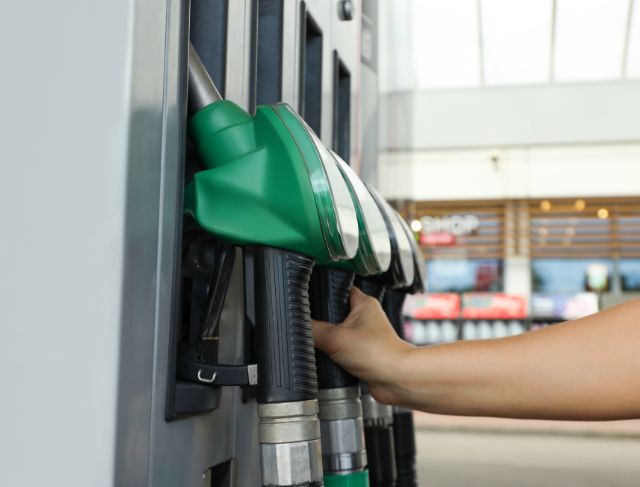
Moreover, the government has implemented the National Fuel Pass, under this system there will be limits to how much petrol every person can purchase (for instance, an owner of a private car would be able to buy 15 ml of petrol and motorcycle users would be allowed to buy around 5 ml per day). Many citizens believe that either of these limitations is far too little for their daily requirements, particularly for citizens who must use their cars to travel to and from work.
The restriction is due in large part to the disruption of the Strait of Hormuz (the narrow waterway that normally transports millions of barrels of oil each day from the Gulf to international markets), as well as the disruption of oil imports from other parts of the world. In Asia, in particular, the reliance on oil transported through that route is much greater than other parts of the world.
As a result of this, Governments in Asia are beginning to implement innovative methods to conserve energy.
In Thailand, residents are being encouraged to dress lighter so that they do not have to use as much air conditioning; and in Myanmar, Authorities have established an odd-even style of regulating vehicle use. In addition, Bangladesh has modified holiday schedules and put in place scheduled blackouts in order to control demand for electricity.
The new President of the Philippines, Ferdinand Marcos Jr., has introduced measures to limit non-essential travel by government officials and allow some of them to work from home. He is also providing financial assistance to various vulnerable groups, including farmers and drivers.
Similarly, Vietnam is also pushing lifestyle changes that encourage citizens to limit their time at home, use public transportation and reduce their reliance on private vehicles.
Meanwhile, Indonesia is trying to determine ways to save money by using fuel more efficiently, including potentially allowing employees to work remotely due to increasing global oil prices.
While the change to midweek vacations can be new for employees in Sri Lanka, it does reflect a larger trend that when the global energy supply becomes unpredictable or unstable, it can also affect daily living patterns, such as experiencing a week where all you need is to be at work on Wednesday, therefore creating an opportunity for you to have an entire additional day off of work than you typically have.
Finally, while to some this will just mean an additional day off to stay at home, the fact remains that for more people than we can imagine this one additional day off of school or work offers a glimpse into how deeply the world events can influence the way we live every day.


