In a time of ever-growing traffic, jammed metropolises, bustling airports, and mass tourism, some locations stand for something significant: silence.
The 2026 Noise-Free Nations Index ranked Bhutan as the quietest nation in the world. Namibia and Botswana come in second and third respectively, which means Africa is well-represented in this list of countries.
Seven factors are called upon to evaluate the countries: population density, tourist density, rural area share, protected areas, motor vehicles per population, airports per geographical area, and railways’ length. The countries that earn more points are considered more peaceful.
In case people are looking for quiet places to visit, the list seems rather useful because the unique nature and human intervention does not interfere with the request for silence.
Bhutan As the Quietest Country in the World
Bhutan tops the list with a Quiet Score of 89.44, which is the greatest one in the Noise-Free Nations Index.
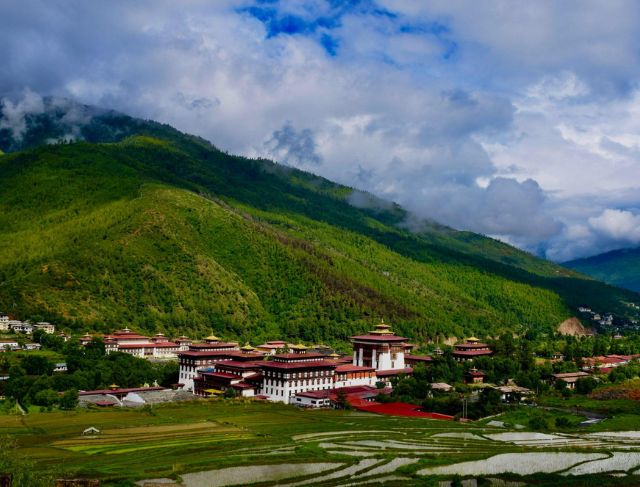
This Himalayan state is distinguished by its stunning mountains, forests, valleys, and low population density. The above-mentioned features help Bhutan build its reputation as one of the most peaceful places to visit.
Bhutan’s population is projected to reach around 797,000 individuals in 2025. The population density is approximately 20 people for every square kilometer of land. Therefore, many areas of the country remain away from the high concentrations of population which can be found in many urban settings.
Topography of the area contributes to that situation.
The cities are located in areas which are difficult to access, and there are sizable areas covered in forests and high mountains rather than being populated by people.
Why Bhutan Is Profoundly Peaceful
The reality that Bhutan is situated in the mountains and has forests is only part of the reason the country enjoys tranquility.
Transportation systems of Bhutan play a key role in ensuring the calm atmosphere in the country.
Bhutan has no railroads, so the movement occurs through roads, winding through mountains.
Traveling by air is rather limited since there is only one airport used for international flights in Bhutan, which is Paro International Airport.
The tourism strategy of Bhutan augments the existing approach.
Bhutan Controls Tourism With Sustainable Travel Program
The nation intentionally has not applied the tourism model that is designed purely to maximize the number of incoming travelers.
Thus, Bhutan has implemented policies that keep the tourism manageable at the same time as ensuring the necessary benefits for the local population as well as the environment.
Among the most known practices, there is the Sustainable Development Fee (SDF) which levies a charge of USD 100 for many international travelers.
The policy makes Bhutan distinct from the locations that rely on the number of tourists for the purposes of their attraction.
Instead of endorsing the unlimited mass tourism, the country prefers a more restrained approach which complies with its ecologic and cultural needs.
This approach can help the country maintain the feeling of space and tranquillity that attract so many travelers.
Namibia Secures the Second Spot Among the Most Tranquil Countries Globally
Namibia attained a Quiet Score of 86.69, soaring to the second position worldwide.
Living in the southern African nation is considered as one of the most unusual indicators concerning the vastness of the territory and the small population.
The area of Namibia amounts to nearly 825,000 square km, while there are approximately 3.09 million people residing in the country.
Therefore, this corresponds to a density of around 3.8 inhabitants per square km.
This means that a great number of regions of the country do not have much of a population.
That contributes to an exceptional feeling of goodness.
Namibia’s Breathtaking Landscapes Generate a Feeling of Solitude
The natural factors are another important contributor to Namibia’s rank.
A big part of Namibia includes dry and semiarid terrains, and among them, one can find the Namib Desert and Skeleton Coast.
The distance between several settlements is enormous, and communities also extend throughout a large area.
Traveling to Namibia, people often face the challenge of spending a substantial amount of time in a car.
The combination of a small population density along with large natural territories, rather limited transportation infrastructure, and the presence of dispersed settlements makes the country of Namibia one of the greatest destinations in the world for travelers searching for isolation.
Namibia Represents a Unique Way of Traveling
Namibia – traveling through Namibia is a different experience compared to visiting a popular tourist destination with a high density of tourists.
Unlike going from one crowded spot to another, tourists spend hours driving through vast territories.
Silence turns into an experience.
In some moments, the horizon looks absolutely limitless, naked desert is seen in any direction.
For travelers looking for a peaceful trip, the sense of distance makes Namibia one of the most attractive places on the planet.
Botswana Is the Third Most Quiet Country in the World
Botswana is rated the third with a Quiet Score of 80.86.
There are around 2.56 million people in the country and it occupies over 581,000 sq. kilometers.
Thus, Botswana has the highest density of over 4 people per sq. kilometer.
According to the reports released by the Government of Botswana, more than 42% of the country is set aside for conservation (including national parks and wildlife reserves).
This results in vast wilderness areas.
Botswana Conservation Areas Preserve Its Quirt Landscape
Botswana has a transportation system capable of holding the traveling tourism.
The major cities are connected through roads, railroads, and air links, and there are airports in some of the major cities (e.g. Gaborone, Francistown, Kasane and Maun).
However, when seen in comparison to other advanced countries, it appears rather weak.
It is when travelers reach the famous safari destinations such as Okavango Delta that remote areas appear.
Vehicles cannot be heard anymore.
Botswana Prioritizes Low-Volume and High-Value Tourism
Botswana has founded a tourism idea based on low-volume and high-value tourism model.
This method can work in favor of both saving the planet and the experience of travelers.
Smaller numbers of tourists mean less strain on the environment while allowing travelers to better connect with nature.
If you are looking for quiet safari spots as your next destination, Botswana is one of the few places that can offer you the mix of wildness, conservation activities, and tourism.
Zambia and Gabon Get into the Top 5
Zambia is ranked fourth with a Quiet Score of 80.64.
It provides travelers with lots of natural landscapes and opportunities to see wild animals in their natural habitats.
Moreover, one of Zambia’s advantages is its walking safari tradition that allows visitors to have a close look at wilderness.
Instead of merely looking at wildlife from a car, visitors can take a walk with experienced guides.
This way, visitors are able to experience nature in the most personal manner.
Gabon is fifth with the score of 80.61.
Its territory consists of the tropical rainforest for more than 85%, which gives the country one of the most preserved nature on the list.
With national parks like Loango National Park, Gabon reaffirms its status as a destination wherein a significant proportion of wilderness remains untouched by any form of development.
The Most Quiet Countries Found in Africa
What is particularly striking is how well Africa does on this list of countries.
There are quite a few nations that come in the top 10, many of which have certain traits indicative of peacefulness. For example, these include low densities of population, many areas of nature, vast areas under protection, and minimal availability of transportation.
Here is the list of top 10 countries:
- Bhutan — Quiet Score 89.44
- Namibia — 86.69
- Botswana — 80.86
- Zambia — 80.64
- Gabon — 80.61
- Venezuela — 80.20
- Chad — 79.82
- Central African Republic — 78.18
- Mongolia — 75.53
- Bolivia — 75.40
As the results show, peacefulness does not have much to do with wealth and state-of-the-art technologies.
It appears that countries that have too few transport facilities are doing better than those countries that have more roads, railways, airports, vehicles, and urban areas.
Mongolia Has Lots of Open Spaces
Mongolia ranks number nine on the list with the Quiet Score of 75.53.
The country has a huge area and relatively small population, which is what makes it obvious for many travelers seeking solitude.
Consequently, Mongol Geography evokes a kind of natural distance that is hard to achieve in countries with high population density.
Bolivia in Tenth Place
Bolivia appears in the Top 10, being at 10-position with a Quiet Score of 75.40.
The South American country is remarkable for its outstanding geographical contrasts, with high mountains being present as well as vast low regions.
The country has many remote natural areas which is why it is included in the list of the quietest countries.
The country offers many opportunities for tourists to leave bustling cities behind and travel to the peaceful and undisturbed areas.
New Zealand Is the Quietest Country and Is Not among Top 16
The list does not include only underdeveloped and sparsely populated countries.
New Zealand takes the 17th position: it is the best among non-leading African and Asian countries.
Australia ranks 20th in the list.
Both countries are well-known for their big natural spots and very low population density apart from the big cities.
Considering that New Zealand is an isolated destination with natural resources, it can be regarded as one of the quietest holiday destinations available with its peaceful atmosphere.
No Country in Europe Ranks with the First 25
Interestingly, none of the countries of Europe are in the list of first 25 quietest places.
The country of Estonia is at the highest place among the countries of Europe, taking the 34th position.
Finland takes 39th place, and Sweden comes in the 40th position.
At first, these results may look strange, as in the Nordic countries, there are many forests and lakes.
Nevertheless, the assessment of the quiet countries has to do with many other reasons not related to nature.
Population density, tourism density and other infrastructures of transportation affect the rating.
Thus, the presence of many wild territories has nothing to do with the final position of the country in the ranking.
America’s Position is Also Low
The USA appears in the 92nd position, which is a very low indicator taking into account those areas of nature that the USA has.
It has been shown that a country’s population, as well as its transport capacity, is important.
A good example to illustrate this is the presence of airports, good road infrastructure, various train routes and many cities and towns that lead to higher levels of movement.
Yet, the ranking suggests that the fact of having peaceful locations in a country does not guarantee that this country will be successful in terms of the total level of peace.
What does it mean to be a quiet country?
The Noise-Free Nations Index gives a great example of how silence depends not only on sound.
There can be a number of factors making the country peaceful that include population size, tourist inflow and existence of open areas.
Transport system may also have an impact on the noise level.
Demand for Quiet Travel Grows
Increasingly, people’s inclination to go to quiet locations signifies a change in travel philosophy. Large cities remain greatly sought-after, yet packed places, traffic jams, waiting on long queues, and congested public areas can easily drain travelers. This is the reason why the interest in finding places where one can gradually unwind increases. Thus, instead of seeking the most eye-catching landmarks to see, travelers think of searching for more room where they can relax. Some destinations that may provide answers to the question of where to go are Bhutan, Namibia, Botswana, Zambia, and Gabon.
Why Travel to a Peaceful Place?
Going to a quiet place does not mean going to a boring one. In many cases, places mentioned at the top of the list in this category have something in common–they offer amazing landscapes. In many countries one can hike in a mountain, go for a safari, or enjoy vast areas of nature without meeting a crowd of tourists.
Bhutan’s leading position in the 2026 Noise-Free Nations Index exemplifies how a high population density, fertile areas, transport infrastructure, and conservation and tourism policies result in a unique environment for visitors.
With a Quiet Score of 89.44, Bhutan is at the top of the list followed by Namibia and Botswana. Zambia and Gabon took the next two positions in the top five.
Tremendous representation of Africa in the list demonstrates the continent’s rich geographical area, low population density, plenty of conservation zones, and well-developed transportation system in some of the regions.
Besides, nations such as Mongolia, New Zealand, Australia, and Bolivia illustrate that the peace-seeking process is not restricted to one continent.
In the end, the quietest countries in the world offer something very rare in contemporary travel: space.
Those who wish to avoid the crowds of big cities, endless traffic jams, and tourist attractions can find in these places a new kind of luxury: being in the middle of the nature almost by themselves or in the company of just a few people and with no sound.