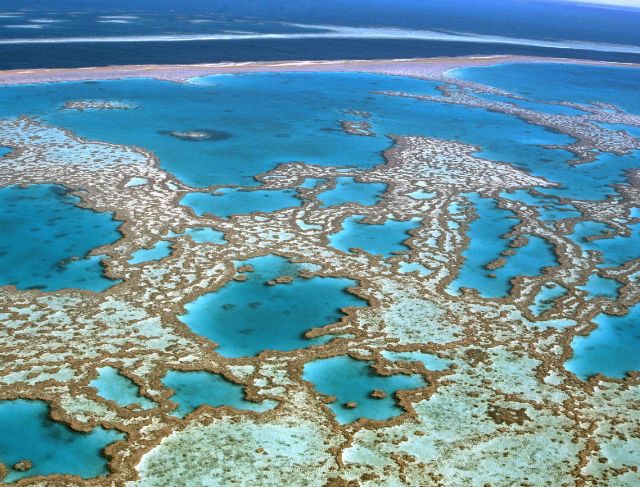
Most people thinking about Australia usually have the Great Barrier Reef in mind. It is located along Queensland’s coast and stretches for over 2,300 km in distance and is said to be the largest living structure in the world. Every year many people visit this amazing place to see the colorful corals and the amazing marine life found there. However, beyond the obvious beauty of the already mentioned location, it’s important to mention that this natural wonder is struggling to survive.
Interestingly, the reef avoided being listed in the list of endangered sites of the World Heritage sites of the UN recently. This would seem to be very good news but the experts in conservation say that celebrations may be short-term.
One of the major worries at the moment is returning stronger El Niño. As sea surface temperature increases across the Pacific Ocean, scientists are concerned this warm water will lead to another mass coral bleaching. Coral bleaching occurs when corals experience stress from unusually high temperatures and expel algae that provide them with nutrients and colors. Without the algae, the corals become white and highly susceptible to diseases and death.
Marine scientists fear that the coming months can be very challenging. Some specialists warn that the impending bleaching will be strong enough to kill some local species and harm entire ecosystems that rely on healthy coral reefs.
The warning signals are already evident. In fact, many areas of the Great Barrier Reef experienced a considerable decline in hard corals between 2024 and 2025 – after the sixth and latest coral bleaching event since 2016 was reported as a result of the rising sea temperatures. The very figure proves how often such events occur these days, leaving corals with hardly any time to recover before the next calamity strikes them.
Climate change is far from the only issue the reef is dealing with. Powerful storms keep hitting vulnerable coral populations. What is more, the pollution from the mainland continues to exert more pressure on corals. Development activities on the coastal zone negatively impact marine ecosystems nearby, and the incidence of outbreaks of crown-of-thorns starfish makes corals even weaker. Therefore, instead of confronting one significant challenge, the ecosystem is facing several threats at once.
The ongoing worries of scientists attending international marine conferences regarding the impact of ongoing environmental disturbances on the reef have grown. Coral ecosystems are strong on their own, but constant exposure to extreme temperatures and multiple pressures makes recovery harder every time. Each bleaching episode diminishes the reef’s capacity to recover before the next one hits.
Due to the ongoing concerns, UNESCO has been keeping track of the Great Barrier Reef for some time now. Although the site has not been officially put on the list of World Heritage sites “in danger,” experts argue that it may happen if environmental conditions get worse.
Many of those studying marine life agree that increased government actions are crucial. Great Barrier Reef has a lot in common with other coral reef territories all over the world.
The Great Barrier Reef has existed for several thousands of years now, providing habitats for millions of marine animals and becoming a symbol of Australian nature. But now environmental changes are coming to the reef faster than ever. If people will be able to see the same colorful corals in the future depends on what we do today.