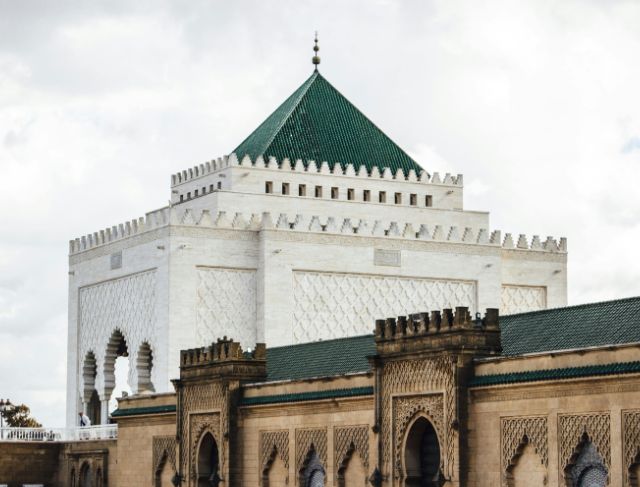
Rabat might be an excellent choice if you wish to experience the country of Morocco while avoiding the chaotic crowds associated with some of the more heavily tourist populated areas, such as Marrakesh. However, while Marrakesh is busy with tourists and has many things going on, Rabat is very relaxed, laid-back, and surprisingly tranquil.
One reason for Rabat’s tranquility is that this is the most distinguishing characteristic of the city.
An example of this would be the ability to stroll down the streets painted white, listen to the waves of the Atlantic ocean crashing in the distance, and go about your daily routine without all the hustle and bustle.
The capital of Morocco is quite large, but it seems to have forgotten what it means to be loud and raucous.
Morocco as a whole is experiencing a boom in Global Tourism. The Country of Morocco has a target of having around twenty-six million tourists visiting by the year 2030 and has ramped up its efforts to attract these international tourists, especially as the country prepares to host the FIFA World Cup.
Over the first two-thirds of 2025 there will have already been close to 20 million visitors to Morocco.
Meanwhile, Rabat has not experienced this growth.
Much of that growth has been attributable to the fact that while Marrakesh’s lodging which increased by approximately forty percent year over year, Rabat’s receiver on lodging was only three percent.
Therefore, the capital of Morocco continues to be somewhat Less Travled.
In 2026, UNESCO has awarded the title of World Book Capital to Rabat in appreciation of the city’s literary heritage and strong tradition in publishing. Rabat has a multitude of publishers, libraries with historical significance, independent bookstores, and hosts Africa’s largest Book Fair.
In acknowledgment of this honour, Rabat has organised year-long literary activities, which will include workshops for writers, marathons for people who enjoy reading, and cultural festivals.
Then there is the appeal of Rabat for lovers of books. It will soon become a cultural destination rather than just being a sleepy seaside resort.
The sound of gently rustling palm trees amidst painstakingly clean streets, magnificent stone towers above Moorish arches, and an ocean breeze that drifts through the calm streets are yet three excellent examples of the calmness one experiences when visiting Rabat. There are few aggressive street peddlers, no incessant noise from motorcycles, and no crowds clogging up narrow alleyways.
The pace of life is slow.
The people of Rabat live a peaceful life, which creates the same ambiance for visitors who wish to wander through this beautiful city.
The atmosphere is markedly different from the busy, loud, and predominately energetic markets in Marrakesh.
Rabat has a modern transportation infrastructure. Public transportation, such as trams and taxis, are easily accessible throughout the city, while high-speed rail systems connect Rabat with Casablanca and Tangier, providing travellers with both comfort and ease of access to their respective destinations.
There’s a laid-back vibe in Rabat, but it’s still a current and connected city.
Rabat began its history as a fortified religious community in the 12th century under the Almohad dynasty. Then when large numbers of Muslim refugees from Spain came to live here in the 17th century, Rabat became a major centre for international commerce and diplomacy with Europe.
Rabat’s diverse cultural heritage made it an international city that has established itself as an intellectual hub.
In 1912, the French chose Rabat as the capital city of Morocco while it was under French colonial rule. The French developed a contemporary European-style neighbourhood adjacent to the old medina, complete with wide boulevards, manicured parks, and ordered streets, while keeping intact the historic section of the city.
Today’s contrast between new and old is one of the defining features of Rabat.
There is an abundance of sites that can take you from Roman remains to contemporary art within a short distance from one another.
Rabat’s Kasbah of the Udayas, built on a cliff edge with views of the Atlantic Ocean, along with Chellah (a necropolis located on the site of Roman ruins), and its beautiful Andalusian Gardens offer the opportunity to see stunning views, as will the Hassan Tower and the Mausoleum of Mohammed V.
The new addition in modern Rabat is the Mohammed VI Museum of Contemporary Art with its solar panel capability.
What makes Rabat so unique is the lifestyle, as well as its rich history and amazing architecture. This city has a slower way of life, cooler breezes from the ocean, parks and gardens throughout the city, and a peaceful atmosphere that many visitors are now searching for.
Unlike Marrakesh, Rabat may never be as busy or crowded, and this will probably serve as a tremendous benefit to those in search of culture, history, and comfort without feeling overwhelmed by the crowds.
Sometimes the best capital cities are not necessarily the loudest ones.
Also, often times, the most memorable places are those where you can hear the sound of the ocean or take your time walking through an area filled with history while taking full advantage of the tranquility that surrounds you.