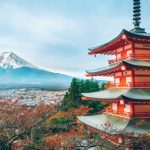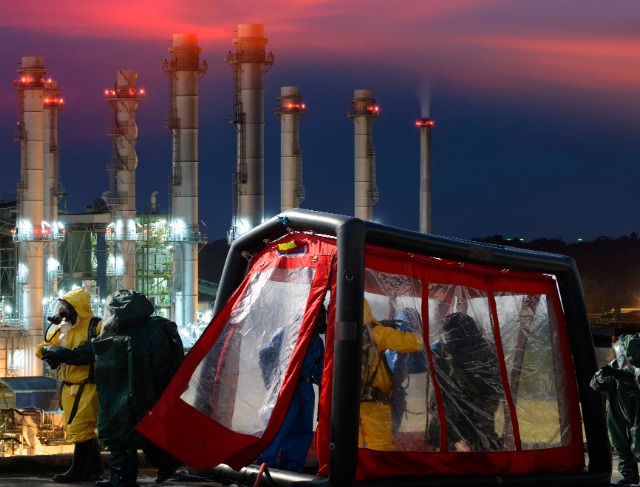
Japan recently held a disaster response drill in anticipation of the possible evacuation of thousands of foreign travelers in the event of a Mount Fuji eruption.
The drill was held in Fujikawaguchiko, Yamanashi Prefecture, and involved approximately 150 participants who were drawn from local government offices, government agencies, transport companies, airlines, and foreign embassies.
The drill was aimed at determining how authorities could carry out the evacuation of international tourists who could be in the vicinity in the eventuality of volcanic activity being taken place. The mayor of Fujikawaguchiko, Hideyuki Watanabe, stated.
Drill Envisages the Situation of Thousands of Tourists Stranded Near Mount Fuji
A simulation of a situation when the volcanic activity of Mount Fuji reaches Level 3 on Japan Meteorological Agency’s alert scale was conducted. In this case the climbers are expected to suspend their climbing activities, and the hikers to make their way back down. Tourists in the surrounding areas will be required to vacate.
The scenario has been designed to assume that the incident occurred during a busy summer Saturday afternoon, when around 2000 foreign tourists had been found stranded in the vicinity of Lake Kawaguchi.
During the exercise the participants discussed various evacuation methods which could include buses or boats. Once they leave the area affected the tourists are expected to be taken to airports to fly back.
Boating might be one of the alternative ways to avoid congestion of the automobiles on the road. Each boat can accommodate about 150 people and take around 15 minutes to make a crossing.
The drill also studied the possible risks of overcrowding in railway stations and on transport hubs. This will occur if the local residents and the tourists start every evacuation simultaneously.
Challenges are posed by linguistic barriers
Linguistic differences were another issue that was brought to light. The Ministry of Internal Affairs of Japan created VoiceTra, which is a free translation application that consists of translations of 33 different languages.
However, VoiceTra requires cloud services, thus giving rise to concerns regarding its efficiency in the case of eruption, during which internet interruptions are expected.
Another point which was made by participants was about the cooperation with foreign embassies to guarantee that foreign tourists would be provided with help in organizing their journey back to their home country.
Fujii, who is a chair of the working group, mentioned that local authorities cannot cope with the evacuation by themselves and that the support of the central authorities will be needed.
The Yamanashi Prefectural Government will collect the information on issues discovered during the disaster response simulation and take it into consideration while improving its plans on disaster response.
The simulation shows the difficulty of evacuating thousands of foreign tourists from Mount Fuji’s region during peak tourist season. There are also issues with the transportation capacity available, traffic jams, language barriers, incidents, and coordination of different governmental institutions.
By detecting those problems beforehand, the government hopes to improve its preparedness in case of a volcanic disaster and make sure tourists will be evacuated once Mount Fuji erupts.