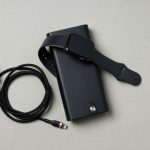
In some cases, an American tourist found that an AI is the best way of having a travel companion while traveling to Japan instead of a tour guide or hotel employee. The tourist was staying in Japan and woke up at four in the morning in his hotel with a room temperature of 100 degrees and could not operate the air conditioning remote control because of the kanji symbols on it, and the remote did not have any symbols to help him figure out how to operate it.
Rather than wait for a couple of hours until morning to call the front desk, the tourist called out to Nano Banana, an AI program from Google, and asked it to scan the remote control. After doing so, the AI program gave the tourist directions in English as to how to operate the air conditioning unit.
Temperature control, fan speed, mode set up and timer settings were very clearly laid out for him. With this, he was finally able to adjust his air conditioning unit and make the space comfortable.
He later went on to put the story on X (formerly known as Twitter) where he joked about how Nano Banana was like a “Godlike helper” for getting him through an early morning struggle. He got some good attention through his post and many commented that they could relate to the situation.
A lot of travelers coming to Japan deal with language barriers on a daily basis, especially when trying to operate advanced electronic devices such as air conditioners, washing machines, and control panels in hotels. While the technology is new and efficient, the way in which they are set up to be used can be very confusing for many international visitors.
There were a number of others that also commented how artificial intelligence (AI) has quickly become one of the top travel tools available today. Smart image-recognition systems translate menus, read signs, and provide us with accurate information about devices, eliminating a lot of the minor frustrations that travelers have while abroad.
One user expressed the fact that when you are trying to figure out how to use a hotel remote in another country, the language barrier adds to all the confusion. Making this story very relatable.
Nano Banana was developed as part of Google’s AI system called Gemini 2.5 Flash Image that lets you analyze images, create new images, translate text and process natural speech in real time. You can use this to scan an object, read a sign written in another language and get a clear explanation of what you’ve scanned immediately.
Now, as a traveller, you would simply have to point your phone camera to translate a sign, instruction, or even the controls on a device.
If I read that story, it shows an emerging trend in the way people travel today. Historically, one of the greatest impediments to travelling internationally, especially in countries with complicated writing systems like Japan, was a language barrier.
The result is that most tourists no longer panic when seeing unfamiliar letters or complicated devices. An AI based tool quickly and easily converts a state of confusion to clarity in just seconds.
Additionally, some travel technologies now also have the ability to help you sleep again when you wake up at night.
So, as we are learning, AI is not only advanced technology today, but AI is also going to be the true companion of anyone travelling and addressing problems they may face daily.