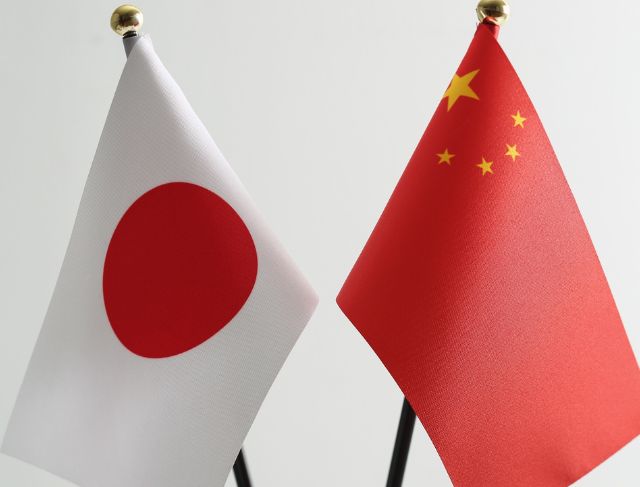
Scrolling through Chinese social media right now will show you that a lot of people are saying to friends and relatives in their network, “Yeah, maybe don’t go to Japan for a while.” This is how things stand. As to whether anyone is actually cancelling plane tickets, that’s a different matter. However, this is how the mood in the air is shaping up for travelers to Japan.
The Initial Travel Alert by the Chinese Embassy in Japan Was Followed by a Second Alert and Then Everything Went Downhill Quickly.
With regard to your question, in late November of 2009, the Chinese Embassy in Japan issued a second travel advisory to Chinese nationals regarding travel safety to Japan, advising Chinese nationals to be cautious because they are being told that Japan is “unsafe,” which was an explosive statement and created quite an uproar across the internet.
Specifically, China’s embassy in Japan stated that it had received reports from Chinese nationals living in Japan who had experienced both verbal harassment and physical attacks as well as general mistreatment with no explanation given to them for the mistreatment. After receiving the reports, the Chinese Government, through its Ministry of Foreign Affairs in Beijing, requested that the Government of Japan provide safety assurance for Chinese citizens.
The Chinese Government pointed to the increasing amount of anti-Chinese sentiment and hostility directed at China on the internet and the harassment of Chinese across social media platforms, the embassy and the Chinese consulates in Japan by right-wing extremists in Japan.
Also, they referenced a spike in criminal activity in Japan. According to statistics provided by Japan’s National Police Agency, more than 568,000 criminal incidents occurred in 2005, and approximately 738,000 criminal incidents occurred in 2020. These statistics are troubling.
Japan’s Response to China: “Wait, Here’s What You’re Missing”
Japan responded quickly. The Foreign Ministry of Japan made it clear that the crime rates in China don’t necessarily support the claims made by China. They also pointed out something that China likely preferred to leave out of the discussion: the amount of serious crimes committed by Chinese citizens in Japan.
As the government of Japan stated:
There were 7 murders and 21 robberies committed by Chinese citizens from January through October of 2025.
In 2024, there were 14 murders, 18 robberies, and 3 arson cases committed by Chinese citizens.
That’s quite a few serious crimes!
A professor of political sociology at University, said that just because people are discussing issues online doesn’t mean they will be a source of real-world threats. He added that it is important for politicians in Japan to send the message that the act of excluding people will not be tolerated.
That is a very reasonable opinion; however, it didn’t get the level of visibility that it deserved, due to the ongoing exchanges of opinions on social media.
This Wasn’t Just About Tourism
In addition to advising citizens not to travel to Japan, the government of China also advised its citizens to think twice about studying in Japan. This report has made families who have been planning to send their children to study overseas extremely anxious.
Travel agencies in Beijing have reported receiving many more calls from parents and concerned students trying to figure out … essentially, “Is this all going to crash down?” (The short answer is no; just don’t expect the least amount of friction between travellers.).
Aeon Co. Opened A Large Mall In China
At the same time as all the geopolitical tensions occurring, a large shopping mall opened in Changsha, Hunan Province by Aeon Co., one of the Japanese Leading Retail Companies.
Surprise, surprise, the locals flocked to it.
Although not everyone was happy to see the new mall; some netizens posted comments with statements like “I WONT SHOP AT JAPANESE STORES AGAIN.”.
Historically, Changsha has had drastic reactions to events. For example, in 2012, anti-Japan protesters smashed up the Japanese stores that were there as a protest after the purchase of the disputed islands by Tokyo in the East China Sea.
So what caused this new wave of anti-Japan sentiment to bubble up? It appears the root of the problem started with a comment made by member of Japanese Parliament Sanae Takaichi saying that if China were to invade Taiwan, Japan’s self-defence force would most likely get involved. This comment was not well received by China.
The remainder of the situation features a seemingly never-ending cycle of potential crises that can be categorized into various categories, as well as online conversations with numerous posters yelling at one another.
So what is our positioning?
Some of the people in China seem to be erring on the side of caution. Meanwhile, Japan continues to assert that it is a secure location. However, political rhetoric between both nations is escalating.
Normal citizens or people not involved in the politics of this situation find themselves in the middle trying to determine what they should do regarding cancellation of travel plans for themselves or their children, or even just doing grocery shopping.
Most importantly, the most apparent fact is that we know that this will not be the last incident where there will be rising tensions between China and Japan since history is clear that these two nations have never been particularly quiet toward each other.