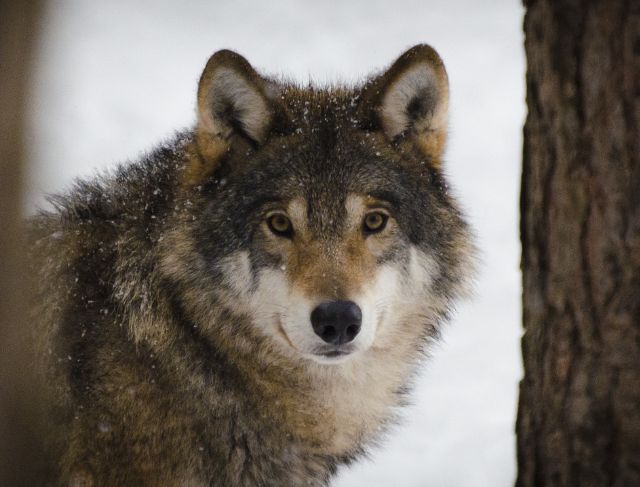
There is something different going on in this part of the world now – the arrival of wolves. After being away from the country for about 200 years, wolves are coming back and Norwegian officials want you to know what to do if you meet one.
Interestingly enough, there is no advice on running away from the animals in question. If you see a wolf during your trip to western Denmark, the professionals recommend that you keep calm, keep your eyes on the animal and do not show that you are afraid of it. Do not turn your back on the animal.
The warning was given after juvenile wolves acted unexpectedly near Oksbøl, one of the tourist areas of Denmark. Although wolves are shy creatures and avoid people, wildlife officials have managed to see some younger individuals visiting camping areas and resorts closer to the human population.
Due to the unusual occurrences, the authorities from Varde Municipality collaborated with Visit Vesterhavet to publish pamphlets across the area. It is worth to mention that pamphlets are available in English, German, and Danish which enable international visitors to understand what needs to be done in case of coming across any of these creatures.
In case the wolf does not leave the place, the instructions are even stricter. People should try their best to frighten it away by clapping their hands, waving their arms, and yelling.
Although no cases of wolf attacks on people are recorded in the recent history of Denmark, there exist emergency measures. Experts argue that in case of something terrible happens, people should not hesitate to fight back using kicks, punches, or any available means to protect themselves.
Visitors with children should also take precautions. It is suggested that anyone under ten years old stays close to an adult whenever they visit areas frequented by wolves recently. The procedure is simply needed to ensure safety.
The appearance of wolves in Denmark has raised a lot of controversies. Environmentalists support those animals because of their status of the EU-protected species and their valuable role in the environment. However, the local farmers and residents feel worried about their livestock safety since two ponies died as a result of their attacks just a few weeks ago.
The whole matter landed in politics. After the attacks by the ponies, several members of the Danish People’s Party were reported to the police for posting on Facebook calls for the killing of wolves. The event demonstrated just how split the opinion about the return of predators has become.
Wolves are not foreign to Denmark. Evidence of fossils suggests that they’ve been present in the country approximately for 13,000 years. The last of these wolves was killed in 1813 and the natural border crossing happened in 2012. Today, the number of wolves living in Denmark is said to be around 49 wolves, primarily inhabiting the Jutland peninsula.
Encounters with wolves are very rare, and millions of people are enjoying their visit in Denmark. However, it is always good to learn about the rules of the environment since they may be really useful and interesting.