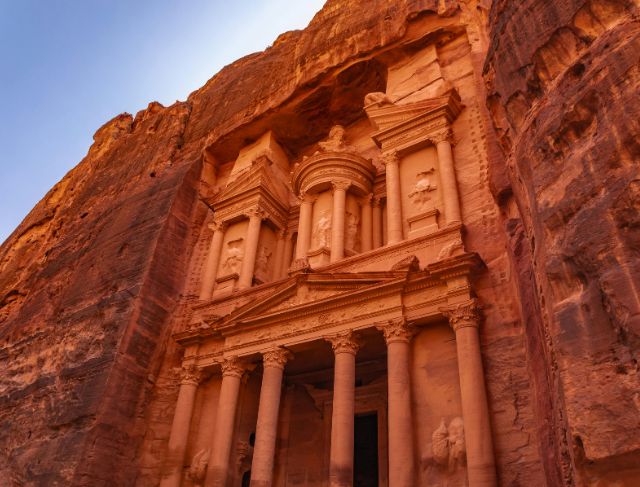
Usually, the streets of Petra are bustling with tourists, Tour Guides explaining the historical significance of the city, and tourists lining up to see the magnificent rock-carved structures built into the surrounding cliffs.
However, in March 2020, the reports from the Jordanian Ministry of Tourism indicate that there were zero tourist bookings for visits to Petra. There are no hotel bookings, tours, or activities in Petra’s town due to the complete cancellation of reservations by tourists visiting Jordan.
This large decrease in activity is not because Petra isn’t attractive to visitors anymore but rather due to geopolitical tension in the Middle East region, as many international tourists are having second thoughts about their travel plans.
The Head of the Petra Authority stated that the current geopolitical shift in the Middle East is affecting global tourism and travel, making many people who had made reservations for trips to Petra in the past two-to-three months, cancel and delay their travels.
March was by far the worst month for cancellations.
April has already experienced about a 60% cancellation rate, and May has seen a decrease of approximately 45% in advance bookings for visits to Petra. There are concerns that if travelers continue to postpone their travel plans, further cancellations will continue.
One of the biggest challenges for Petra is that tourism is the main source of income. Because Petra is an ancient city and a great place to visit, there are many locals who depend on tourism for their jobs, such as tour guides, drivers, restaurant workers, hotel employees, and souvenir vendors.
With so many visitors each year, the local economy has an outpouring of support when these numbers decline.
Ironically, the beginning of 2019 was a great year for Petra and it appeared that tourism was going to be very strong in Petra based on the first two months of the year and then rapidly declined as news of instability in the region caused most travellers to cancel their trips.
There were also no tourism visits reported to Petra, which is hardly ever seen in one of the top tourist destinations in the Middle East.
As a result, the local government is working to develop ways to help lessen the negative effect of the decrease in tourism.
Promoting internal travel within a country can be a way to encourage people to book vacations.
The Petra Authority is trying to motivate Jordanian people to visit sites in Jordan by offering an “Urdun.Jannah” program which will provide Jordanians traveling to Petra with some income:” If enough local people are able to afford to travel throughout the year, this may provide enough money for businesses that rely on travel and tourism for their livelihood.
While local travelers are coming, adjacent opportunities usable by the Petra Authority during slow travel times have opened up as well.
Since so few travelers are present since the start of the slow travel season, the Petra Authority has the opportunity to upgrade and/or repair parts of Petra, such as cleaning, infrastructure, and restoration.
The fact that there are no crowds, unusual as this is, may provide a wonderful opportunity for Petra to do what is most difficult during high travel volume – to provide repairs to the ancient site.
Abroad, the international travel industry is reacting coolly to the current conditions abroad, e.g., cancellation of tour travel to the Middle East by several United States-Based travel companies, including Collete, who has stated that it will not provide any tours to the Middle East until after at least March 21.
According to employees at the company, they continue to monitor the situation closely and will implement new policies if necessary.
For those travelers longing to see the Rose City’s famed treasury carved from pink stone, the actual location continues to exist.
These incredible structures still remain as they have done for centuries, in the middle of a desert.
Yet at present, the crowds that generally throng their way through the jagged crevices of Petra’s majestic sandstone canyons are at an all-time low due to the impact of global events well beyond the historical and cultural fabric of the ancient city; thus showing everyone how fragile global tourism is to an ever-changing world.