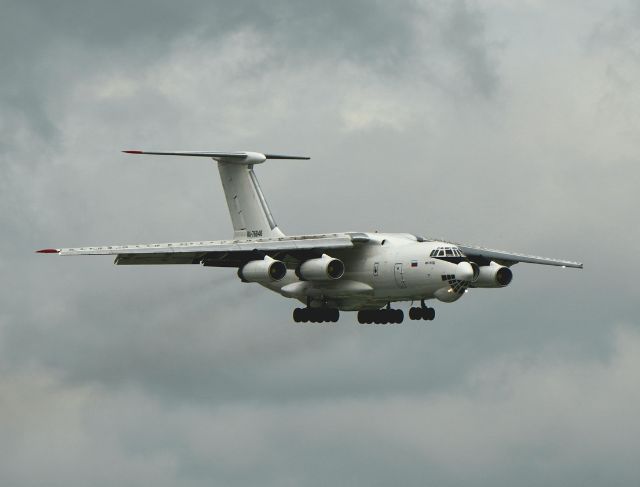
The aircraft strayed from the runway, collided with a security vehicle, and ultimately crashed into the water — all due to one engine considering it was taking off instead of landing. And, believe it or not, it really is as ridiculous as it sounds.
Two airport employees perished, the incident led to one of the most extraordinary landing incidents Hong Kong has seen in years.
The Engine Gone Mad
According to Hong Kong’s Air Accident Investigation Authority (AAIA), immediately after the cargo flight EK9788 landed at approximately 3:52 AM, its engine number 4 went forward. Not slow forward. Instead, in fact, it surged.
The data said:
- 90% forward thrust post touchdown
- Rocketed to rise to 107% in just 12 seconds
This is the equivalent of an aircraft on landing deciding to floor the accelerator right as it settles onto its final parking delta. So, yeah, if you ask aviation experts, they won’t sugar coat it:
“Yeah… that’s not supposed to happen,” more or less.
With one engine pushing forward as if it wanted to take a sprint, and the other three engines doing what they were supposed to do — basically nothing — instantly, the aircraft was unlevel.
This lopsided thrust headed the aircraft left, and off the north runway at Hong Kong International Airport.
A few moments later, the large jet struck a security patrol vehicle, before coming to a halt in the water next to the runway.
A frightening series of events — all because an engine had other plans.
And the best part? The plane wasn’t even operated by Emirates. It was an Emirates-coded cargo flight operated by ACT Airlines, a Turkish cargo operator, that had come in from Dubai.
And remember that engine’s thrust reverser? It was unserviceable pre-flight. But under aviation regulations, it was still legal to fly the plane with one reverser down, due to autobrakes and the three other reversers.
Once the wheels touched the ground and the engine began misbehaving, the autobrake system disengaged without explanation.
In that situation, it forced the flight crew to brake manually, which is totally possible in a normal landing —
but when you have one engine doing its best to replicate a marathon?
Good luck trying to stabilize a 300-ton jet in that scenario.
To this day, investigators have yet to discover why the autobrake disengaged. That answer waits deep in the full investigation.
Experts Offer Their Perspective
Darryl from the Hong Kong Institute of Engineers practically best captured the reaction from the pilot community:
“Engines are supposed to slow you down when you are landing. They don’t suddenly accelerate.”
Steven from the Hong Kong Professional Airline Pilots Association also pointed out the bleeding obvious: good luck controlling an aircraft if only one of your engines is powering forward and the rest are just sitting there idling.
It was just after 8 p.m. on October 20, 2022, when cargo flight EK9788 drifted closer to Hong Kong International Airport having already lined up with the north runway and touched down like any other late-night arrival. At least no one was expecting what followed.
Almost instantaneously, the aircraft rolled out of control, skidded off of the runway, struck a patrol vehicle positioned beside the runway, and ultimately came to rest partially submerged beside the edge of the runway.
Emergency vehicles converged on the aircraft. The aircraft crew survived, however, two airport security officers occupants of the patrol vehicle did not. The incident sent shockwaves throughout Hong Kong, resulting in a shake down response as preliminary investigations immediately began.
Hong Kong authorities are expecting a full final report within a year — but it is common for these cases to take more than a year to resolve.
With one engine developing a runaway effect, a reverser not working, an autobrake taking a breather, and a crash excursion on the runway, the investigators have many parts to scrutinize.